A patient guide to osteopathic and regenerative care

Drag a corner, swipe, or use the arrow keys to turn pages.
Guide text
Page 1: Cover
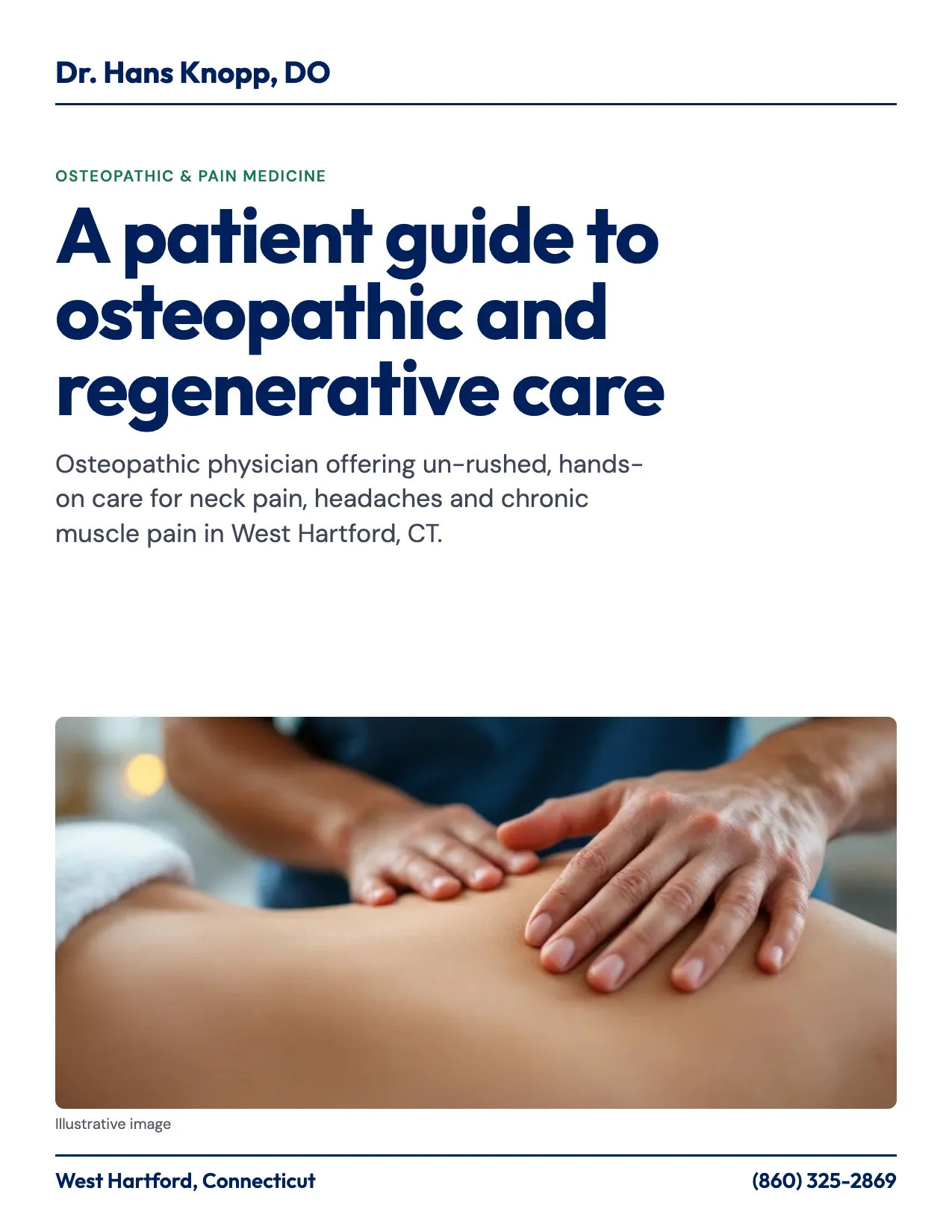
Dr. Hans Knopp, DO OSTEOPATHIC & PAIN MEDICINE A patient guide to osteopathic and regenerative care Osteopathic physician offering un-rushed, hands-on care for neck pain, headaches and chronic muscle pain in West Hartford, CT. Illustrative image West Hartford, Connecticut (860) 325-2869
Page 2: About Dr. Knopp
Dr. Hans Knopp, DO OSTEOPATHIC & PAIN MEDICINE ABOUT DR. KNOPP ABOUT Hans Knopp, DO Doctor of Osteopathic Medicine. Dual board-certified. Fellowship-trained at UPMC. 25 peer-reviewed publications. Dr. Knopp is a Doctor of Osteopathic Medicine, trained to see the body as a connected system, not a collection of isolated parts. His approach combines hands-on osteopathic diagnosis with his dual board certification in Physical Medicine & Rehabilitation and Pain Medicine. 25 PEER-REVIEWED PUBLICATIONS 2 BOARD CERTIFICATIONS 11+ YEARS IN PRACTICE Education & credentials 2017 TO 2018 Pain Medicine Fellowship, University of Pittsburgh Medical Center 2014 TO 2017 PM&R Residency, Tufts Medical Center, Boston 2009 TO 2013 Doctor of Osteopathic Medicine, Rowan University SOM Board Certifications Physical Medicine & Rehabilitation (ABPMR) Pain Medicine (ABPMR) Professional Memberships American Academy of Physical Medicine & Rehabilitation American Academy of Pain Medicine Connecticut Medical Society Licensure Connecticut state medical license, Active DEA registration, Active
Page 3: Why a micropractice
Dr. Hans Knopp, DO OSTEOPATHIC & PAIN MEDICINE THE PRACTICE PRACTICE MODEL Why a micropractice After completing his fellowship at UPMC and practicing within the hospital system, Dr. Knopp saw that osteopathic medicine done well takes time: thorough examination, hands-on treatment, and continuity with one doctor. The micropractice model is built for that. With a limited panel and extended appointment times, Dr. Knopp can conduct a complete osteopathic structural exam, administer OMT, review imaging, discuss interventional options, and build a long-term relationship with each patient. This practice is private pay. Initial consultations are 60 minutes. Return visits are 30 minutes. Function over pain scores The goal of treatment isn't a number on a pain scale. It's restoring the ability to do the things that matter, walking without compensation, sleeping without waking, returning to work or sport or life without limitation. This micropractice exists because complex pain patients need time. Patients deserve direct access and a physician who examines them as well as reviewing their imaging. Medicine is not an assembly line. Every patient deserves a physician who knows their history, uses their hands, and has the time to actually listen. HANS KNOPP, DO
Page 4: Medicine without the assembly line
Dr. Hans Knopp, DO OSTEOPATHIC & PAIN MEDICINE THE PRACTICE A DIFFERENT KIND OF PRACTICE Medicine without the assembly line This is a high-touch micropractice. You see Dr. Knopp, not a rotating cast of providers. Every visit is un-rushed, hands-on, and focused on getting you back to the things you want to do. This practice runs on time. Dr. Knopp uses his hands as the primary diagnostic and therapeutic tool, combining osteopathic manipulative treatment with his dual board certification in PM&R and Pain Medicine. Hospital procedures, such as epidural injections and nerve stimulation, are evaluated and scheduled through Dr. Knopp's Hartford HealthCare practice. For musculoskeletal pain, care starts here, in this office, with a thorough evaluation and direct treatment. One Doctor, Every Visit No residents, no PAs filling in. You see Dr. Knopp every time. Un-rushed Appointments Thorough initial evaluations and follow-ups with enough time to actually listen, examine, and treat. Direct Contact Reach Dr. Knopp directly. No call centers, no phone trees, no waiting days for a callback. Function Over Pain Scores The goal isn't a number on a chart, it's getting you back to doing what you couldn't do before. Illustrative image
Page 5: Built around time and hands-on care
Dr. Hans Knopp, DO OSTEOPATHIC & PAIN MEDICINE THE PRACTICE THE PRACTICE Built around time and hands-on care Hands-on treatment first, targeted injections when the exam points to them, and procedures through Hartford HealthCare when conservative care isn't enough. THE FOCUS Neck, Headache & Chronic Muscle Pain Dr. Knopp's focus is complex chronic muscle (myofascial) pain and complex spine problems in the upper half of the body: neck pain, headaches that start in the neck, facial pain, and shoulder and shoulder blade pain. He also treats chronic myofascial pain in people with joint hypermobility, including hypermobile EDS. THE FOUNDATION Osteopathic Manipulative Treatment Hands-on diagnosis and treatment matched to what the exam finds in the neck, spine and muscles. OMT is at the center of care in this practice. IN THE OFFICE Trigger Point Injections Targeted injections done in the private office when the exam points to them, alongside hands-on care for chronic myofascial pain. FOR SOME PATIENTS PRP Therapy PRP remains an option for some patients, most often with sports, joint and tendon problems. Dr. Knopp goes through whether the evidence fits your condition. THROUGH HARTFORD HEALTHCARE Interventional Procedures Epidural injections, nerve blocks, radiofrequency ablation, and peripheral nerve stimulation, evaluated and scheduled through Dr. Knopp's Hartford HealthCare practice.
Page 6: Your first visit
Dr. Hans Knopp, DO OSTEOPATHIC & PAIN MEDICINE GETTING STARTED GETTING STARTED Your first visit The first visit runs 60 minutes, with Dr. Knopp for all of it. Part of that time goes to the spot that hurts. The rest goes to the structures that load it. How do I schedule an appointment? Contact Dr. Knopp directly, by phone at (860) 325-2869 or through the contact form. There is no online scheduling portal. New patients are accepted on a space-available basis, Dr. Knopp keeps the practice intentionally small to maintain appointment quality. What should I bring to my first appointment? Bring any relevant imaging, MRI, X-ray, CT, on disc or with a radiology report. If you have prior surgical records, operative notes, or prior treatment summaries, those are helpful but not required. Wear comfortable clothing you can move in; you will be examined standing, seated, and supine. There is no intake paperwork to complete in advance. Dr. Knopp takes the history himself at the start of your visit. How is this practice different from a regular doctor's office? Visits at this practice are private pay and are not billed through insurance. Dr. Knopp charges directly for his time and does not bill insurance. The result is longer appointments, typically 60 minutes for an initial visit, a physician who actually examines you, and direct access without waiting weeks for a slot. Illustrative image
Page 7: What to expect
Dr. Hans Knopp, DO OSTEOPATHIC & PAIN MEDICINE HOW CARE WORKS THE PROCESS What to expect Every appointment is with Dr. Knopp. 1 Initial Evaluation 60 minutes. Full medical history, review of prior imaging and records, complete TART examination, and first treatment in the same visit. You leave with a diagnosis and a plan, not a referral. 2 Treatment Course Progress is assessed each visit, no predefined packages. 3 Escalation When Needed If OMT reaches its ceiling, or if imaging, electrodiagnostics, or an interventional procedure would improve the outcome, Dr. Knopp can order and coordinate those directly. How many OMT sessions will I need? The number depends on the problem and on how the tissue responds. Dr. Knopp reassesses at each visit and gives you an estimate after the first evaluation. Progress is reassessed at every visit. If you are not responding as expected, Dr. Knopp will tell you directly and discuss whether a different approach, procedures or regenerative therapy, is more appropriate. Illustrative image
Page 8: Pricing and insurance
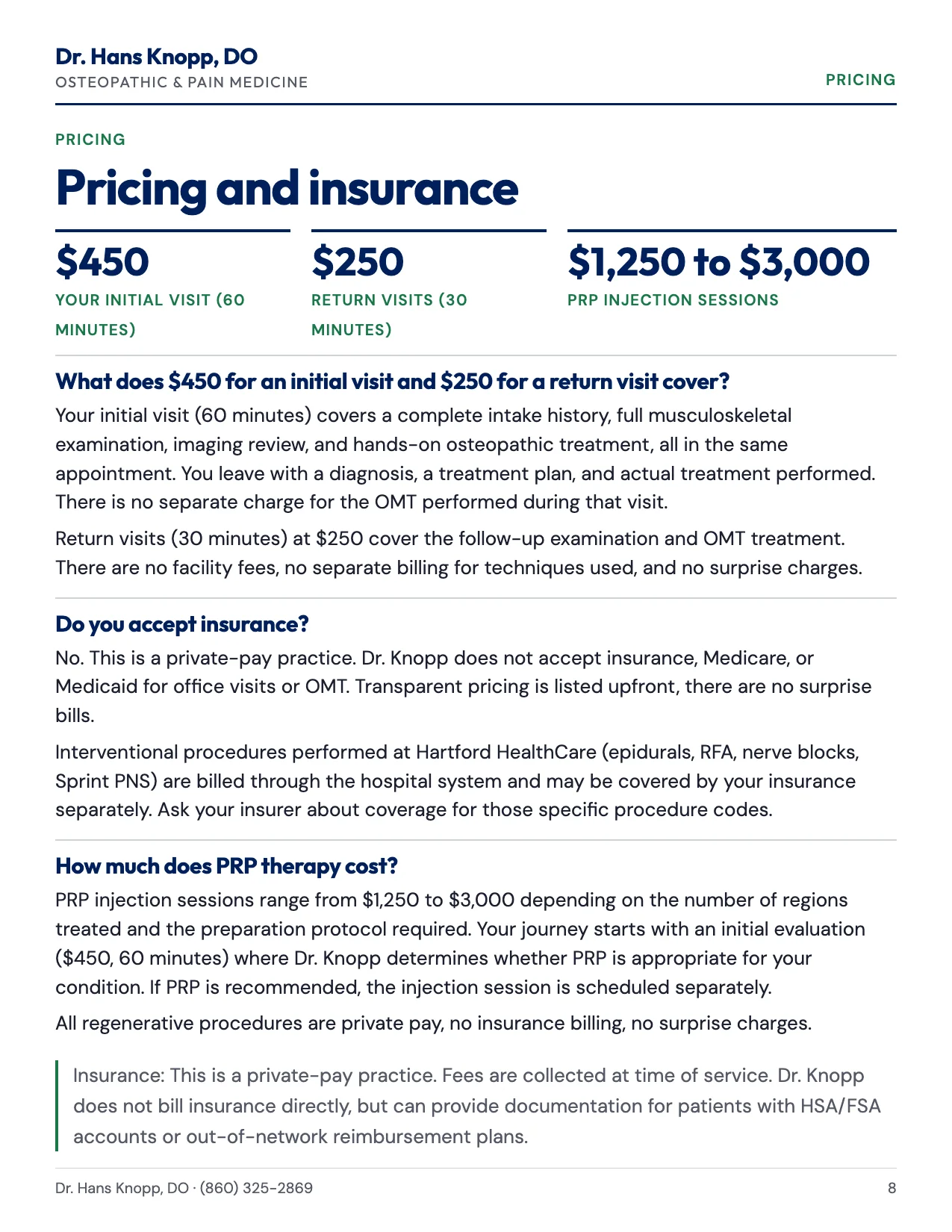
Dr. Hans Knopp, DO OSTEOPATHIC & PAIN MEDICINE PRICING PRICING Pricing and insurance $450 YOUR INITIAL VISIT (60 MINUTES) $250 RETURN VISITS (30 MINUTES) $1,250 to $3,000 PRP INJECTION SESSIONS What does $450 for an initial visit and $250 for a return visit cover? Your initial visit (60 minutes) covers a complete intake history, full musculoskeletal examination, imaging review, and hands-on osteopathic treatment, all in the same appointment. You leave with a diagnosis, a treatment plan, and actual treatment performed. There is no separate charge for the OMT performed during that visit. Return visits (30 minutes) at $250 cover the follow-up examination and OMT treatment. There are no facility fees, no separate billing for techniques used, and no surprise charges. Do you accept insurance? No. This is a private-pay practice. Dr. Knopp does not accept insurance, Medicare, or Medicaid for office visits or OMT. Transparent pricing is listed upfront, there are no surprise bills. Interventional procedures performed at Hartford HealthCare (epidurals, RFA, nerve blocks, Sprint PNS) are billed through the hospital system and may be covered by your insurance separately. Ask your insurer about coverage for those specific procedure codes. How much does PRP therapy cost? PRP injection sessions range from $1,250 to $3,000 depending on the number of regions treated and the preparation protocol required. Your journey starts with an initial evaluation ($450, 60 minutes) where Dr. Knopp determines whether PRP is appropriate for your condition. If PRP is recommended, the injection session is scheduled separately. All regenerative procedures are private pay, no insurance billing, no surprise charges. Insurance: This is a private-pay practice. Fees are collected at time of service. Dr. Knopp does not bill insurance directly, but can provide documentation for patients with HSA/FSA accounts or out-of-network reimbursement plans.
Page 9: What OMT actually is
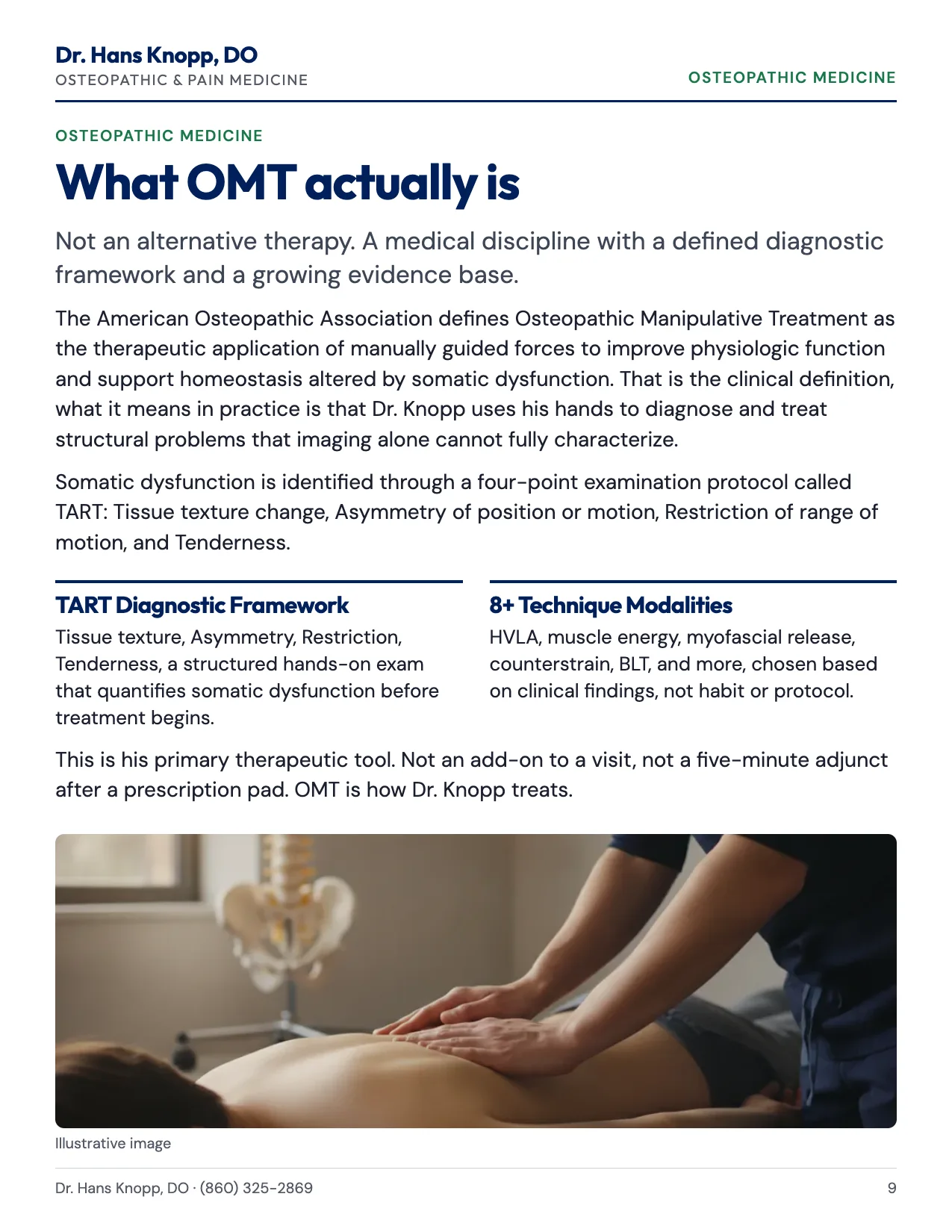
Dr. Hans Knopp, DO OSTEOPATHIC & PAIN MEDICINE OSTEOPATHIC MEDICINE OSTEOPATHIC MEDICINE What OMT actually is Not an alternative therapy. A medical discipline with a defined diagnostic framework and a growing evidence base. The American Osteopathic Association defines Osteopathic Manipulative Treatment as the therapeutic application of manually guided forces to improve physiologic function and support homeostasis altered by somatic dysfunction. That is the clinical definition, what it means in practice is that Dr. Knopp uses his hands to diagnose and treat structural problems that imaging alone cannot fully characterize. Somatic dysfunction is identified through a four-point examination protocol called TART: Tissue texture change, Asymmetry of position or motion, Restriction of range of motion, and Tenderness. TART Diagnostic Framework Tissue texture, Asymmetry, Restriction, Tenderness, a structured hands-on exam that quantifies somatic dysfunction before treatment begins. 8+ Technique Modalities HVLA, muscle energy, myofascial release, counterstrain, BLT, and more, chosen based on clinical findings, not habit or protocol. This is his primary therapeutic tool. Not an add-on to a visit, not a five-minute adjunct after a prescription pad. OMT is how Dr. Knopp treats. Illustrative image
Page 10: OMT, chiropractic and what it feels like
Dr. Hans Knopp, DO OSTEOPATHIC & PAIN MEDICINE OSTEOPATHIC MEDICINE OSTEOPATHIC MEDICINE OMT, chiropractic and what it feels like Is OMT the same as chiropractic? OMT is delivered by a Doctor of Osteopathic Medicine (DO). A DO completes a full 4-year medical degree and is licensed as a physician, plus receives additional training in osteopathic principles and manual medicine. Dr. Knopp is also fellowship-trained in Pain Medicine and board-certified in both PM&R and Pain Medicine. As a licensed physician, Dr. Knopp can order and interpret imaging, prescribe medications, perform procedures, and refer to specialists. He can also determine when manual therapy is not the right treatment and escalate to something more appropriate. OMT is one tool in a physician's toolkit, not the only tool. Technique-wise, DO training covers 8+ manual modalities: high-velocity low-amplitude (HVLA), muscle energy, myofascial release, strain-counterstrain, balanced ligamentous tension, facilitated positional release, craniosacral, and visceral manipulation. Technique selection is based on clinical presentation, not a standard protocol applied to every patient. Does OMT hurt? The treatment itself should not be painful. Mild soreness at treated areas for 24-48 hours afterward is common, similar to post-workout muscle soreness, and is a normal tissue response. It usually settles within a day or two. Technique selection is based on your presentation. High-velocity thrust techniques are not used on every patient, if you are acutely inflamed, have osteoporosis, or are post-surgical near the treatment site, gentler techniques such as muscle energy or myofascial release are used instead. Dr. Knopp will explain what he is doing and why at each visit. Scope of this practice: Cupping, dry needling, and metabolic or integrative medicine are outside the scope of this practice. Dr. Knopp's focus is musculoskeletal and pain medicine, applying OMT within the clinical context of a fellowship-trained pain specialist. Patients seeking those services should look for providers credentialed specifically in them.
Page 11: What the evaluation covers
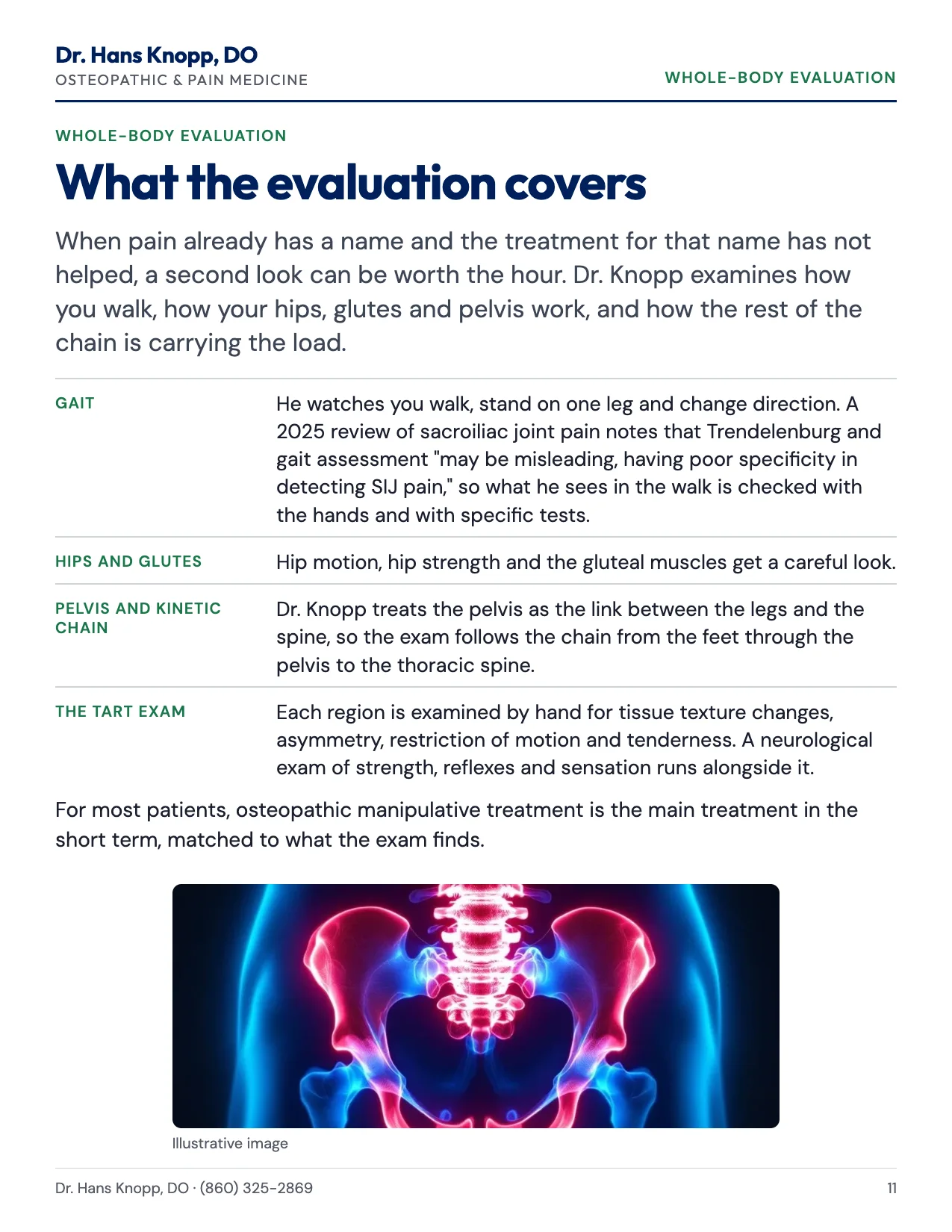
Dr. Hans Knopp, DO OSTEOPATHIC & PAIN MEDICINE WHOLE-BODY EVALUATION WHOLE-BODY EVALUATION What the evaluation covers When pain already has a name and the treatment for that name has not helped, a second look can be worth the hour. Dr. Knopp examines how you walk, how your hips, glutes and pelvis work, and how the rest of the chain is carrying the load. GAIT He watches you walk, stand on one leg and change direction. A 2025 review of sacroiliac joint pain notes that Trendelenburg and gait assessment "may be misleading, having poor specificity in detecting SIJ pain," so what he sees in the walk is checked with the hands and with specific tests. HIPS AND GLUTES Hip motion, hip strength and the gluteal muscles get a careful look. PELVIS AND KINETIC CHAIN Dr. Knopp treats the pelvis as the link between the legs and the spine, so the exam follows the chain from the feet through the pelvis to the thoracic spine. THE TART EXAM Each region is examined by hand for tissue texture changes, asymmetry, restriction of motion and tenderness. A neurological exam of strength, reflexes and sensation runs alongside it. For most patients, osteopathic manipulative treatment is the main treatment in the short term, matched to what the exam finds. Illustrative image
Page 12: Neck pain that has not settled
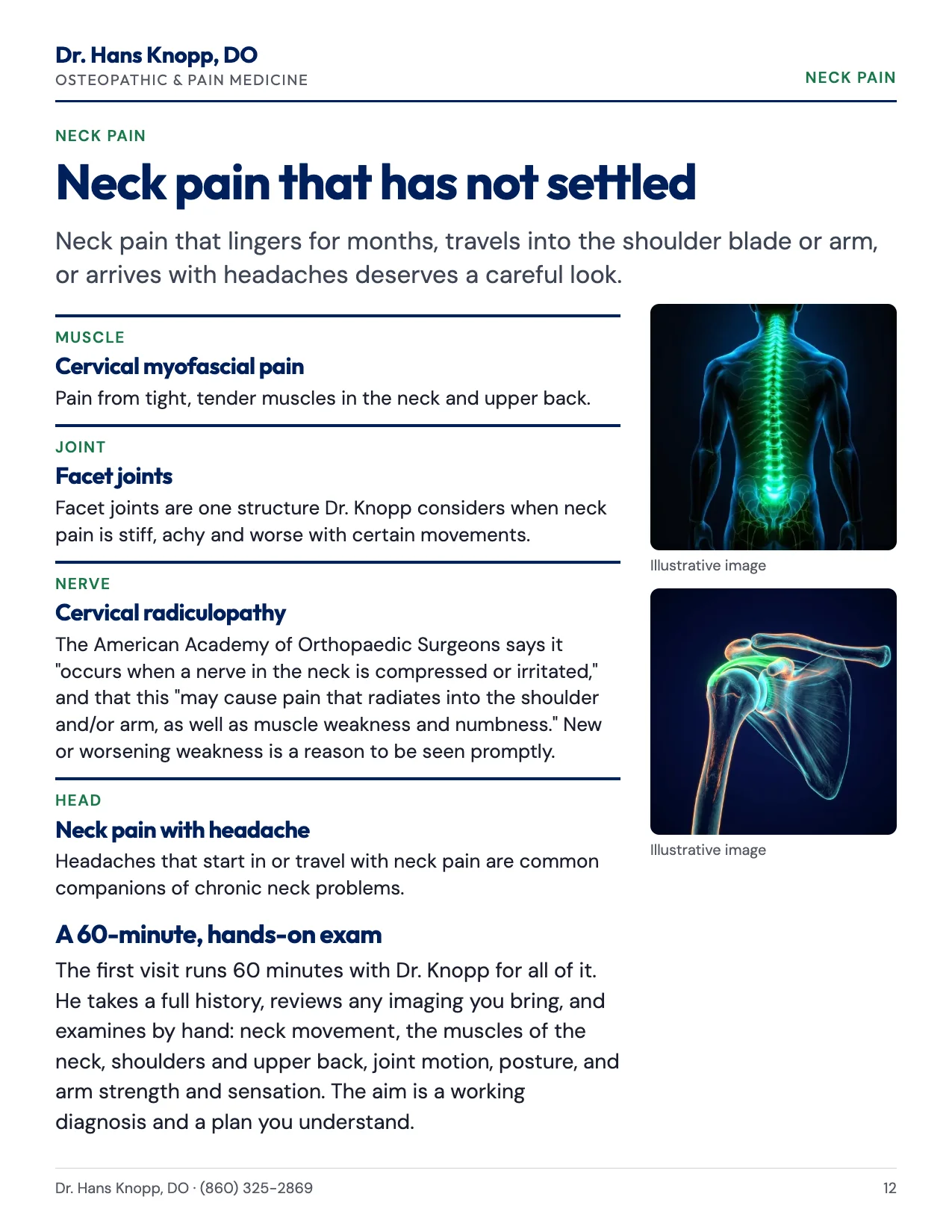
Dr. Hans Knopp, DO OSTEOPATHIC & PAIN MEDICINE NECK PAIN NECK PAIN Neck pain that has not settled Neck pain that lingers for months, travels into the shoulder blade or arm, or arrives with headaches deserves a careful look. MUSCLE Cervical myofascial pain Pain from tight, tender muscles in the neck and upper back. JOINT Facet joints Facet joints are one structure Dr. Knopp considers when neck pain is stiff, achy and worse with certain movements. NERVE Cervical radiculopathy The American Academy of Orthopaedic Surgeons says it "occurs when a nerve in the neck is compressed or irritated," and that this "may cause pain that radiates into the shoulder and/or arm, as well as muscle weakness and numbness." New or worsening weakness is a reason to be seen promptly. HEAD Neck pain with headache Headaches that start in or travel with neck pain are common companions of chronic neck problems. A 60-minute, hands-on exam The first visit runs 60 minutes with Dr. Knopp for all of it. He takes a full history, reviews any imaging you bring, and examines by hand: neck movement, the muscles of the neck, shoulders and upper back, joint motion, posture, and arm strength and sensation. The aim is a working diagnosis and a plan you understand. Illustrative image Illustrative image
Page 13: What treatment can include
Dr. Hans Knopp, DO OSTEOPATHIC & PAIN MEDICINE NECK PAIN NECK PAIN What treatment can include OMT OMT is at the center of Dr. Knopp's approach to neck pain, matched to what the exam finds. The research on manual treatment is encouraging in places and limited in others. A Cochrane review of 51 trials found that "results for cervical manipulation and mobilisation versus control are few and diverse," that publication bias could not be ruled out, and rated the chronic neck pain results as low quality. EXERCISE A Cochrane review of 27 exercise trials found moderate-quality evidence that specific strengthening of the neck, shoulder and shoulder blade region helps chronic neck pain. Dr. Knopp builds exercise into the plan so that hands-on work has something to hold it in place. TRIGGER POINT INJECTIONS Targeted trigger point injections are done in the private office when the exam points to them. The evidence base is modest: the American Family Physician article notes that "relatively few controlled studies on trigger-point injection have been conducted." That article dates from 2002. BOTOX Botox is one of the tools Dr. Knopp may use for some patients with neck pain, headache or facial pain. Candidacy is discussed at the visit. The FDA label lists uses that include prevention of headaches in adults with chronic migraine and treatment of adults with cervical dystonia, and it carries a boxed warning titled "DISTANT SPREAD OF TOXIN EFFECT." RADIOFREQUENCY AND SPRINT Cervical radiofrequency and Sprint peripheral nerve stimulation are options evaluated through Dr. Knopp's Hartford HealthCare practice, 65 Memorial Road, Suite 435, West Hartford, (860) 696-2840. PRP PRP is available for some patients.
Page 14: A headache that comes from the neck
Dr. Hans Knopp, DO OSTEOPATHIC & PAIN MEDICINE HEADACHE AND NECK PAIN CERVICOGENIC HEADACHE A headache that comes from the neck The International Headache Society's classification (ICHD-3) defines cervicogenic headache as "Headache caused by a disorder of the cervical spine and its component bony, disc and/or soft tissue elements, usually but not invariably accompanied by neck pain." Migraine is a different condition. Telling the two apart takes an exam, and the two can coexist. NECK Cervicogenic headache Pain that starts in the upper neck and spreads into the head, often on one side. NERVE Occipital neuralgia ICHD-3 describes it as "paroxysmal, shooting or stabbing pain in the posterior part of the scalp" in the area served by the occipital nerves, often with tenderness over the affected nerve. FACE Facial pain syndromes with neck pain In Dr. Knopp's experience, facial pain syndromes often come with neck pain, and he treats them with hands-on care and, for some patients, Botox. Facial pain has many causes, so the first step is a careful look at where it starts. HANDS-ON TREATMENT Osteopathic manipulative treatment is one of the tools Dr. Knopp uses for neck-related pain and headache. Hands-on care may help in the short term; the long-term picture is unclear. BOTOX The FDA-approved labeling lists one headache use: "Prophylaxis of headaches in adult patients with chronic migraine (≥15 days per month with headache lasting 4 hours a day or longer)." Use for other headache types, including cervicogenic headache, is not an approved use.
Page 15: Myofascial pain and trigger points
Dr. Hans Knopp, DO OSTEOPATHIC & PAIN MEDICINE MUSCLE PAIN MYOFASCIAL PAIN Myofascial pain and trigger points Myofascial pain syndrome is pain tied to trigger points in muscle. It can show up anywhere, and neck, shoulder and upper back muscles are common sites. Trigger points A 2015 review in PM&R describes a myofascial trigger point as "a discrete, hyperirritable nodule in a taut band of skeletal muscle which is palpable and tender during physical examination." An active one is "clinically associated with spontaneous pain in the immediate surrounding tissue and/or to distant sites in specific referred pain patterns," so the pain can appear away from the tender spot. Hands-on care Osteopathic manipulative treatment is hands-on care matched to what the exam finds. The research is limited. Exercise Exercise is built into the plan, with referral to a physical therapist where that helps. Illustrative image Trigger point injections A trigger point injection places a needle into the tender spot in the muscle. Targeted trigger point injections are done in the private office when the exam points to them. Injections are one option among several, and you can ask about the evidence before deciding. Injections in the neck and upper back region carry a specific risk: a 2016 case report and literature review notes "a risk of pneumothorax during trigger point injection in the cervicothoracic regions," meaning air entering the space around the lung. Dr. Knopp reviews the risks that apply to your injection before it is done.
Page 16: Chronic pain with joint hypermobility
Dr. Hans Knopp, DO OSTEOPATHIC & PAIN MEDICINE HYPERMOBILITY HYPERMOBILITY Chronic pain with joint hypermobility If your joints move farther than most people's and your muscles and joints hurt most days, the cause can be hard to pin down. Does Dr. Knopp treat pain from hypermobility, including hEDS? Yes. Dr. Knopp treats the chronic pain, with attention to the muscles and joints around it. Whether you meet criteria for a particular diagnosis, and any symptoms beyond pain, may call for other clinicians, and he will tell you when that is the case. SYMPTOMS Symptomatic joint hypermobility Joints that move beyond the usual range and cause problems such as pain or repeated sprains. Many people with flexible joints have no trouble at all. SPECTRUM Hypermobility spectrum disorders It is a real diagnosis with real symptoms, including pain. CRITERIA Hypermobile Ehlers-Danlos syndrome (hEDS) Unlike most other Ehlers-Danlos types, hEDS is diagnosed from the clinical picture rather than a confirming gene test. Illustrative image LIFESTYLE CHANGES Lifestyle changes are part of the plan, and what they look like for you is discussed at the visit. TARGETED PHYSICAL THERAPY Targeted physical therapy means working with therapists who understand hypermobility. The aim is to build control around joints that move too far. HANDS-ON TREATMENT Dr. Knopp adapts hands-on care to each patient. Controlled trials of manual treatment in this group are lacking.
Page 17: Conditions & approach
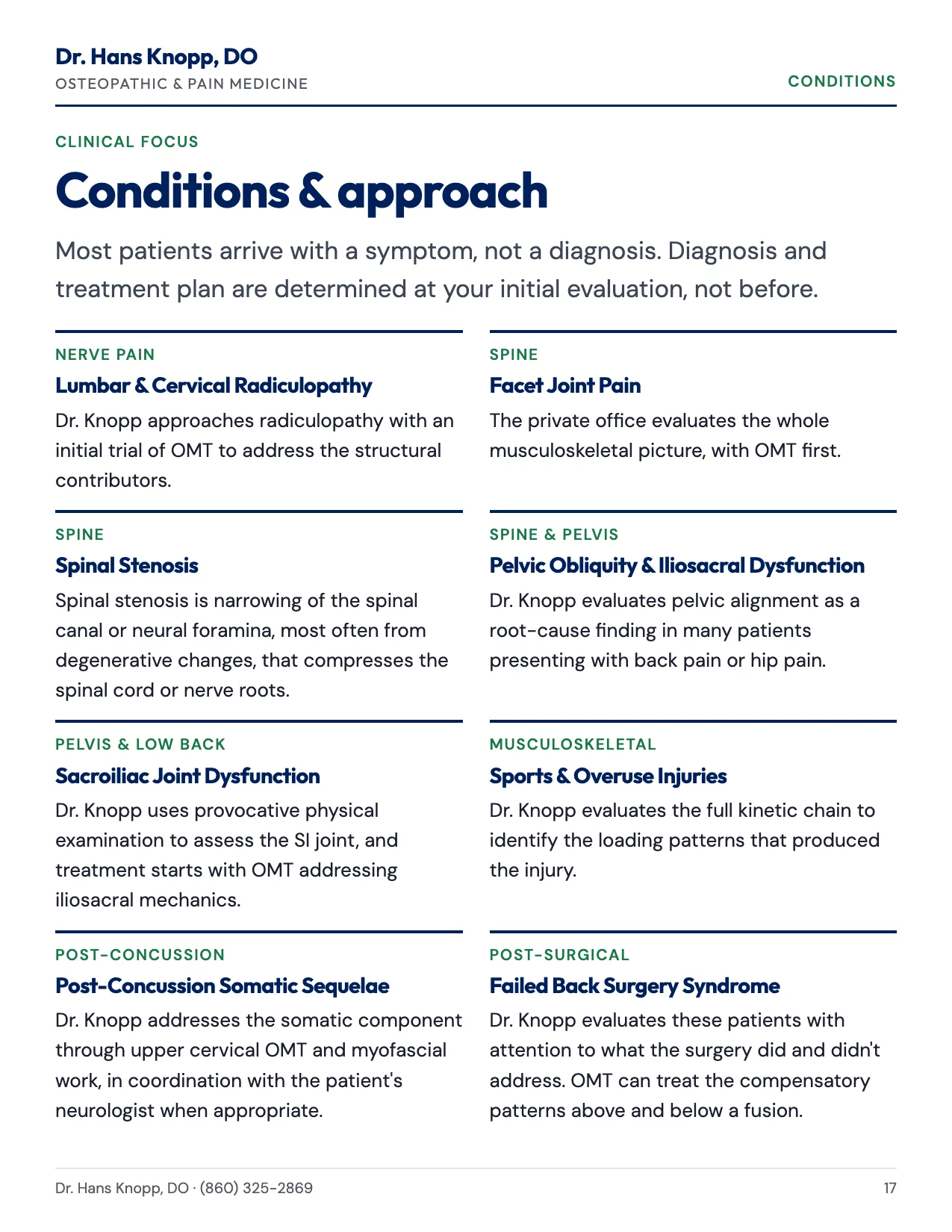
Dr. Hans Knopp, DO OSTEOPATHIC & PAIN MEDICINE CONDITIONS CLINICAL FOCUS Conditions & approach Most patients arrive with a symptom, not a diagnosis. Diagnosis and treatment plan are determined at your initial evaluation, not before. NERVE PAIN Lumbar & Cervical Radiculopathy Dr. Knopp approaches radiculopathy with an initial trial of OMT to address the structural contributors. SPINE Facet Joint Pain The private office evaluates the whole musculoskeletal picture, with OMT first. SPINE Spinal Stenosis Spinal stenosis is narrowing of the spinal canal or neural foramina, most often from degenerative changes, that compresses the spinal cord or nerve roots. SPINE & PELVIS Pelvic Obliquity & Iliosacral Dysfunction Dr. Knopp evaluates pelvic alignment as a root-cause finding in many patients presenting with back pain or hip pain. PELVIS & LOW BACK Sacroiliac Joint Dysfunction Dr. Knopp uses provocative physical examination to assess the SI joint, and treatment starts with OMT addressing iliosacral mechanics. MUSCULOSKELETAL Sports & Overuse Injuries Dr. Knopp evaluates the full kinetic chain to identify the loading patterns that produced the injury. POST-CONCUSSION Post-Concussion Somatic Sequelae Dr. Knopp addresses the somatic component through upper cervical OMT and myofascial work, in coordination with the patient's neurologist when appropriate. POST-SURGICAL Failed Back Surgery Syndrome Dr. Knopp evaluates these patients with attention to what the surgery did and didn't address. OMT can treat the compensatory patterns above and below a fusion.
Page 18: How PRP actually works
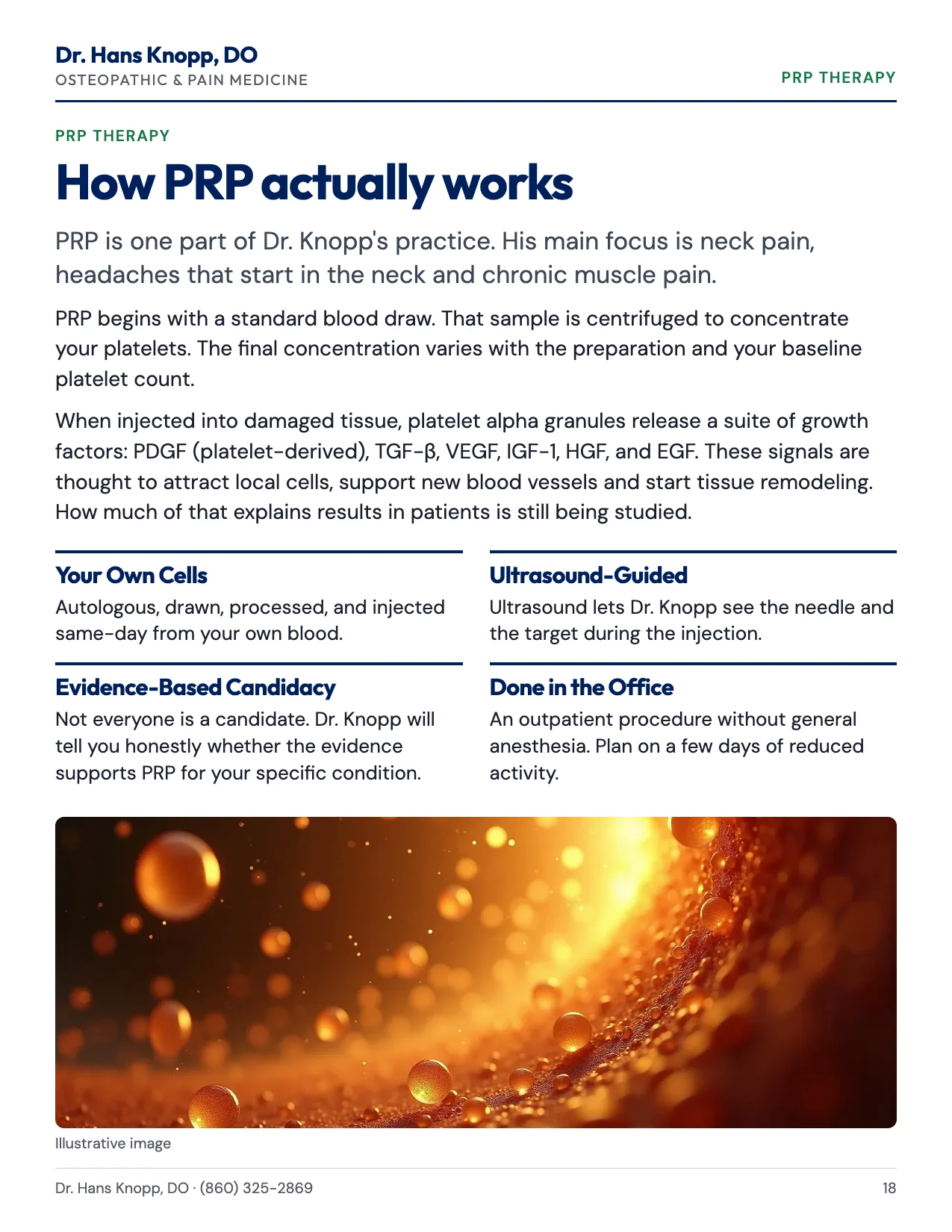
Dr. Hans Knopp, DO OSTEOPATHIC & PAIN MEDICINE PRP THERAPY PRP THERAPY How PRP actually works PRP is one part of Dr. Knopp's practice. His main focus is neck pain, headaches that start in the neck and chronic muscle pain. PRP begins with a standard blood draw. That sample is centrifuged to concentrate your platelets. The final concentration varies with the preparation and your baseline platelet count. When injected into damaged tissue, platelet alpha granules release a suite of growth factors: PDGF (platelet-derived), TGF-β, VEGF, IGF-1, HGF, and EGF. These signals are thought to attract local cells, support new blood vessels and start tissue remodeling. How much of that explains results in patients is still being studied. Your Own Cells Autologous, drawn, processed, and injected same-day from your own blood. Ultrasound-Guided Ultrasound lets Dr. Knopp see the needle and the target during the injection. Evidence-Based Candidacy Not everyone is a candidate. Dr. Knopp will tell you honestly whether the evidence supports PRP for your specific condition. Done in the Office An outpatient procedure without general anesthesia. Plan on a few days of reduced activity. Illustrative image
Page 19: Where PRP has been studied most
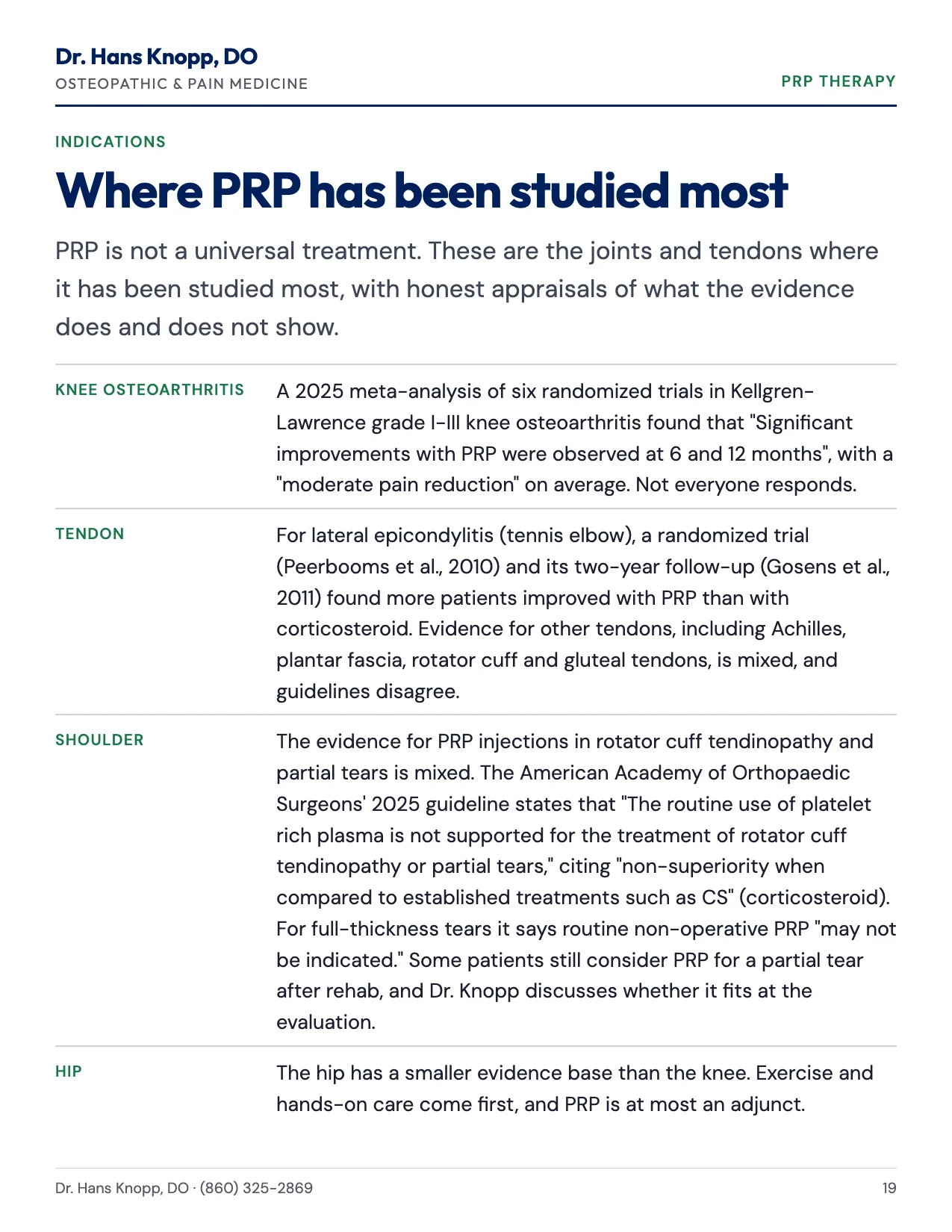
Dr. Hans Knopp, DO OSTEOPATHIC & PAIN MEDICINE PRP THERAPY INDICATIONS Where PRP has been studied most PRP is not a universal treatment. These are the joints and tendons where it has been studied most, with honest appraisals of what the evidence does and does not show. KNEE OSTEOARTHRITIS A 2025 meta-analysis of six randomized trials in Kellgren-Lawrence grade I-III knee osteoarthritis found that "Significant improvements with PRP were observed at 6 and 12 months", with a "moderate pain reduction" on average. Not everyone responds. TENDON For lateral epicondylitis (tennis elbow), a randomized trial (Peerbooms et al., 2010) and its two-year follow-up (Gosens et al., 2011) found more patients improved with PRP than with corticosteroid. Evidence for other tendons, including Achilles, plantar fascia, rotator cuff and gluteal tendons, is mixed, and guidelines disagree. SHOULDER The evidence for PRP injections in rotator cuff tendinopathy and partial tears is mixed. The American Academy of Orthopaedic Surgeons' 2025 guideline states that "The routine use of platelet rich plasma is not supported for the treatment of rotator cuff tendinopathy or partial tears," citing "non-superiority when compared to established treatments such as CS" (corticosteroid). For full-thickness tears it says routine non-operative PRP "may not be indicated." Some patients still consider PRP for a partial tear after rehab, and Dr. Knopp discusses whether it fits at the evaluation. HIP The hip has a smaller evidence base than the knee. Exercise and hands-on care come first, and PRP is at most an adjunct.
Page 20: The honest timeline
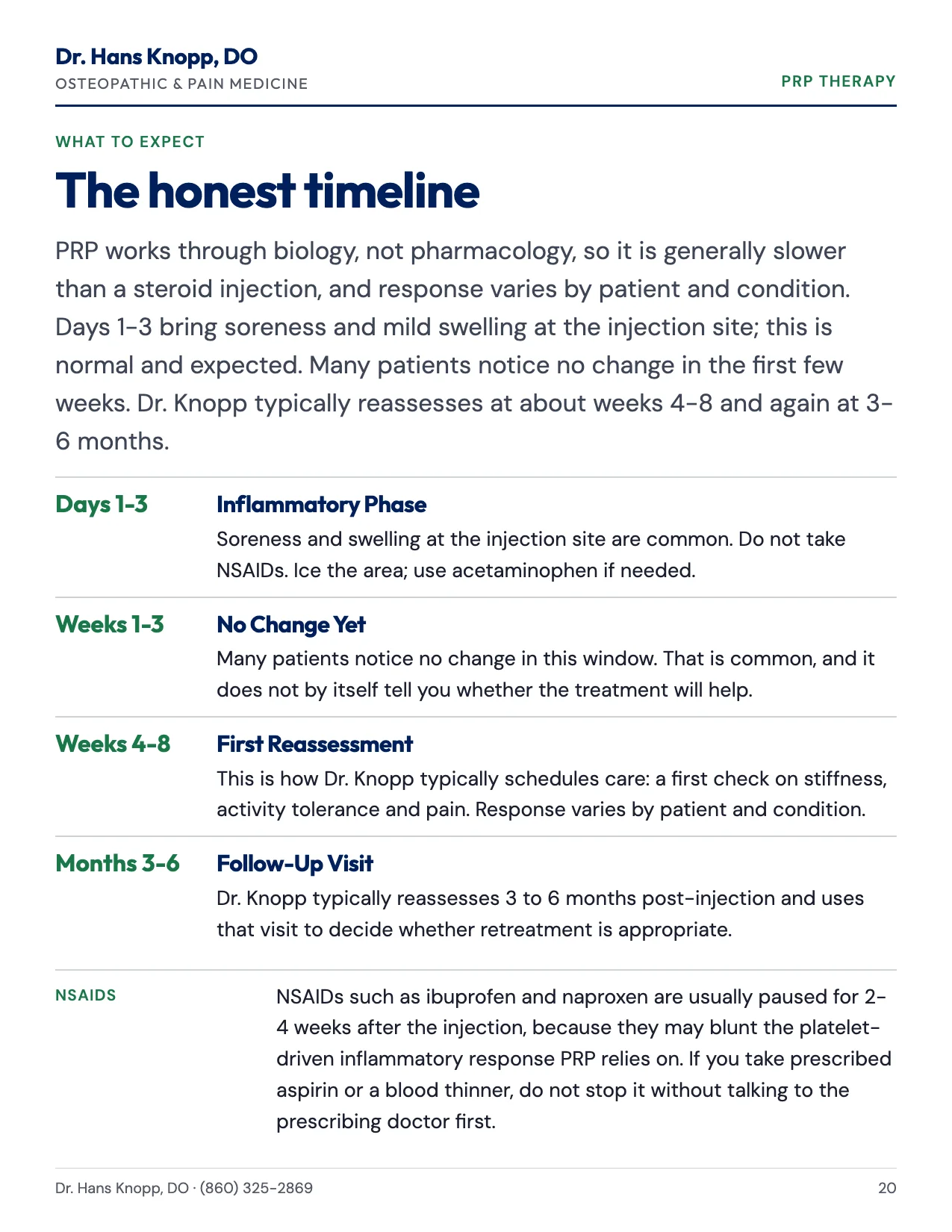
Dr. Hans Knopp, DO OSTEOPATHIC & PAIN MEDICINE PRP THERAPY WHAT TO EXPECT The honest timeline PRP works through biology, not pharmacology, so it is generally slower than a steroid injection, and response varies by patient and condition. Days 1-3 bring soreness and mild swelling at the injection site; this is normal and expected. Many patients notice no change in the first few weeks. Dr. Knopp typically reassesses at about weeks 4-8 and again at 3-6 months. Days 1-3 Inflammatory Phase Soreness and swelling at the injection site are common. Do not take NSAIDs. Ice the area; use acetaminophen if needed. Weeks 1-3 No Change Yet Many patients notice no change in this window. That is common, and it does not by itself tell you whether the treatment will help. Weeks 4-8 First Reassessment This is how Dr. Knopp typically schedules care: a first check on stiffness, activity tolerance and pain. Response varies by patient and condition. Months 3-6 Follow-Up Visit Dr. Knopp typically reassesses 3 to 6 months post-injection and uses that visit to decide whether retreatment is appropriate. NSAIDS NSAIDs such as ibuprofen and naproxen are usually paused for 2-4 weeks after the injection, because they may blunt the platelet-driven inflammatory response PRP relies on. If you take prescribed aspirin or a blood thinner, do not stop it without talking to the prescribing doctor first.
Page 21: Who PRP may help
Dr. Hans Knopp, DO OSTEOPATHIC & PAIN MEDICINE PRP THERAPY CANDIDACY Who PRP may help Good candidates Knee OA grade I-III with documented cartilage loss but intact joint space Chronic tendinopathy unresponsive to physical therapy and conservative care Patients not yet ready for surgery who can accept that any improvement builds over weeks, not days Please contact Dr. Knopp before ruling yourself out. Whether PRP is right for you, including how any other health conditions affect it, is decided at the evaluation. Is PRP safe for patients over 60? Often, when the patient is a candidate. Because PRP uses your own blood, rejection is not a concern, but it is still an injection and can cause soreness, bleeding, or infection. Tell Dr. Knopp about all medications, especially blood thinners. Age alone does not disqualify a patient. The primary consideration is candidacy, the tissue condition must be appropriate for regenerative treatment. Patients with uncontrolled diabetes, active malignancy, or blood disorders may not be candidates regardless of age. Dr. Knopp evaluates each patient individually. PRP injection sessions range from $1,250 to $3,000 depending on the number of regions treated and the preparation protocol required. Your journey starts with an initial evaluation ($450, 60 minutes) where Dr. Knopp determines whether PRP is appropriate for your condition. If PRP is recommended, the injection session is scheduled separately. PRP is not FDA-approved for orthopedic indications, and insurance generally does not cover it. Payment is due at time of service. Illustrative image
Page 22: How PRP and OMT fit together
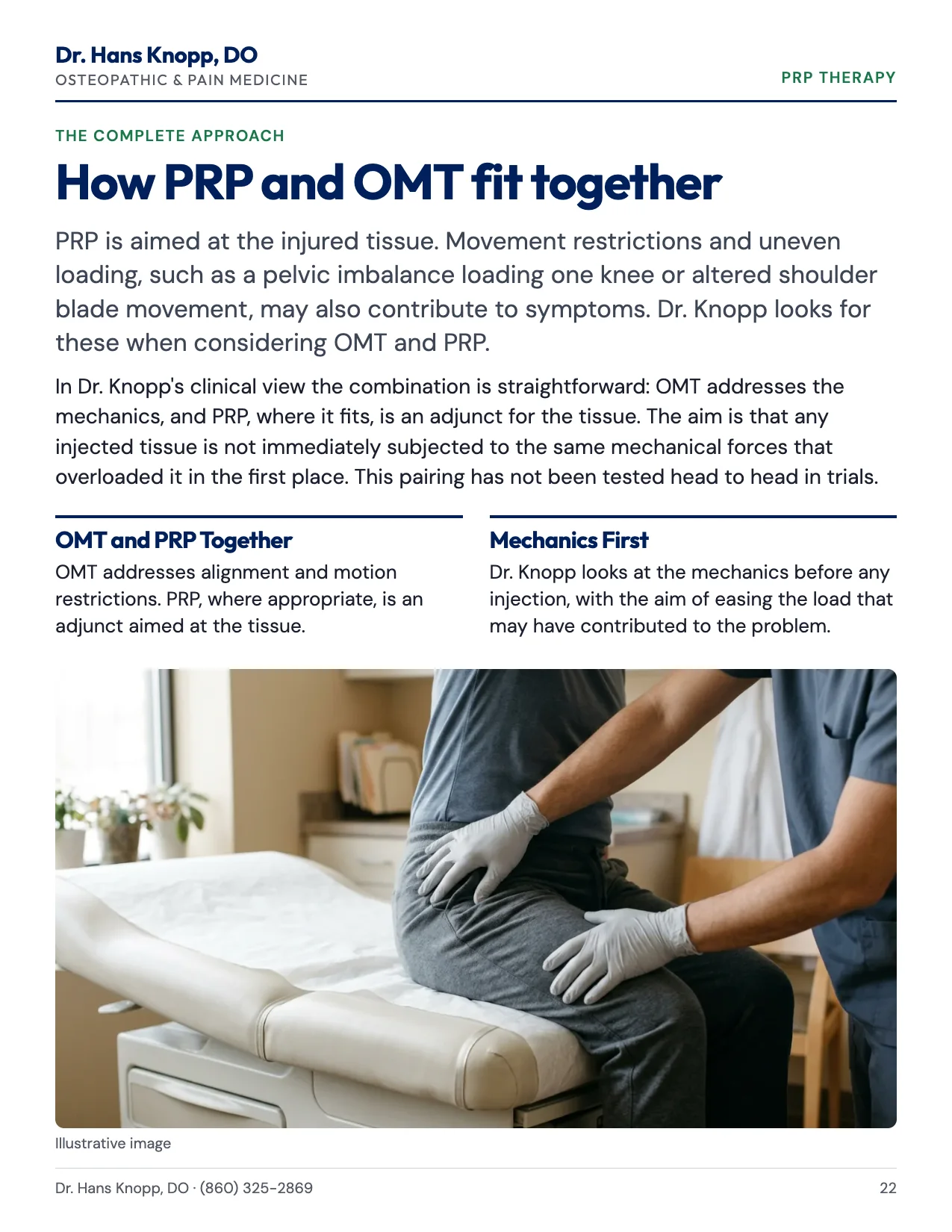
Dr. Hans Knopp, DO OSTEOPATHIC & PAIN MEDICINE PRP THERAPY THE COMPLETE APPROACH How PRP and OMT fit together PRP is aimed at the injured tissue. Movement restrictions and uneven loading, such as a pelvic imbalance loading one knee or altered shoulder blade movement, may also contribute to symptoms. Dr. Knopp looks for these when considering OMT and PRP. In Dr. Knopp's clinical view the combination is straightforward: OMT addresses the mechanics, and PRP, where it fits, is an adjunct for the tissue. The aim is that any injected tissue is not immediately subjected to the same mechanical forces that overloaded it in the first place. This pairing has not been tested head to head in trials. OMT and PRP Together OMT addresses alignment and motion restrictions. PRP, where appropriate, is an adjunct aimed at the tissue. Mechanics First Dr. Knopp looks at the mechanics before any injection, with the aim of easing the load that may have contributed to the problem. Illustrative image
Page 23: Interventional Pain Procedures
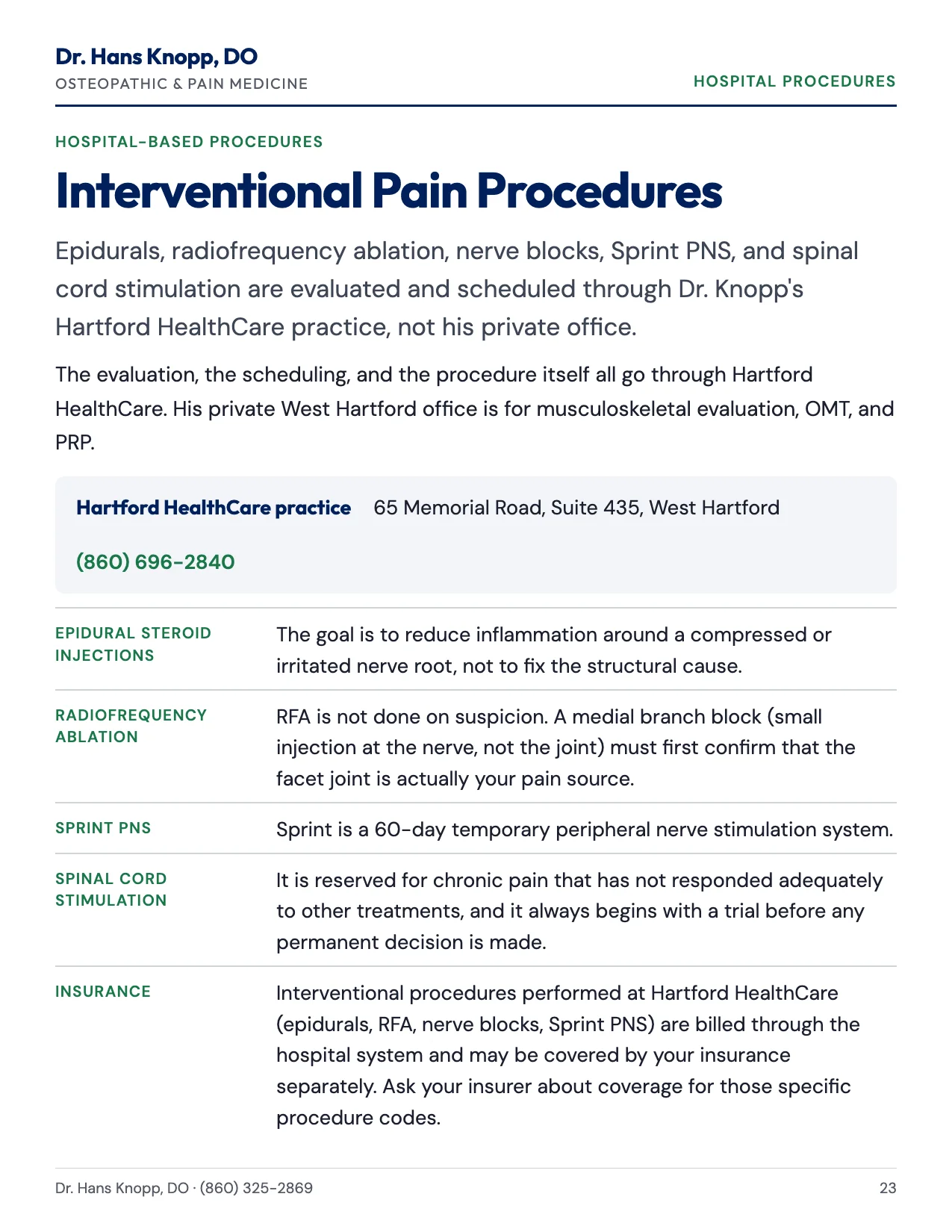
Dr. Hans Knopp, DO OSTEOPATHIC & PAIN MEDICINE HOSPITAL PROCEDURES HOSPITAL-BASED PROCEDURES Interventional Pain Procedures Epidurals, radiofrequency ablation, nerve blocks, Sprint PNS, and spinal cord stimulation are evaluated and scheduled through Dr. Knopp's Hartford HealthCare practice, not his private office. The evaluation, the scheduling, and the procedure itself all go through Hartford HealthCare. His private West Hartford office is for musculoskeletal evaluation, OMT, and PRP. Hartford HealthCare practice 65 Memorial Road, Suite 435, West Hartford (860) 696-2840 EPIDURAL STEROID INJECTIONS The goal is to reduce inflammation around a compressed or irritated nerve root, not to fix the structural cause. RADIOFREQUENCY ABLATION RFA is not done on suspicion. A medial branch block (small injection at the nerve, not the joint) must first confirm that the facet joint is actually your pain source. SPRINT PNS Sprint is a 60-day temporary peripheral nerve stimulation system. SPINAL CORD STIMULATION It is reserved for chronic pain that has not responded adequately to other treatments, and it always begins with a trial before any permanent decision is made. INSURANCE Interventional procedures performed at Hartford HealthCare (epidurals, RFA, nerve blocks, Sprint PNS) are billed through the hospital system and may be covered by your insurance separately. Ask your insurer about coverage for those specific procedure codes.
Page 24: Neck and chronic pain care across Hartford and the Farmington Valley
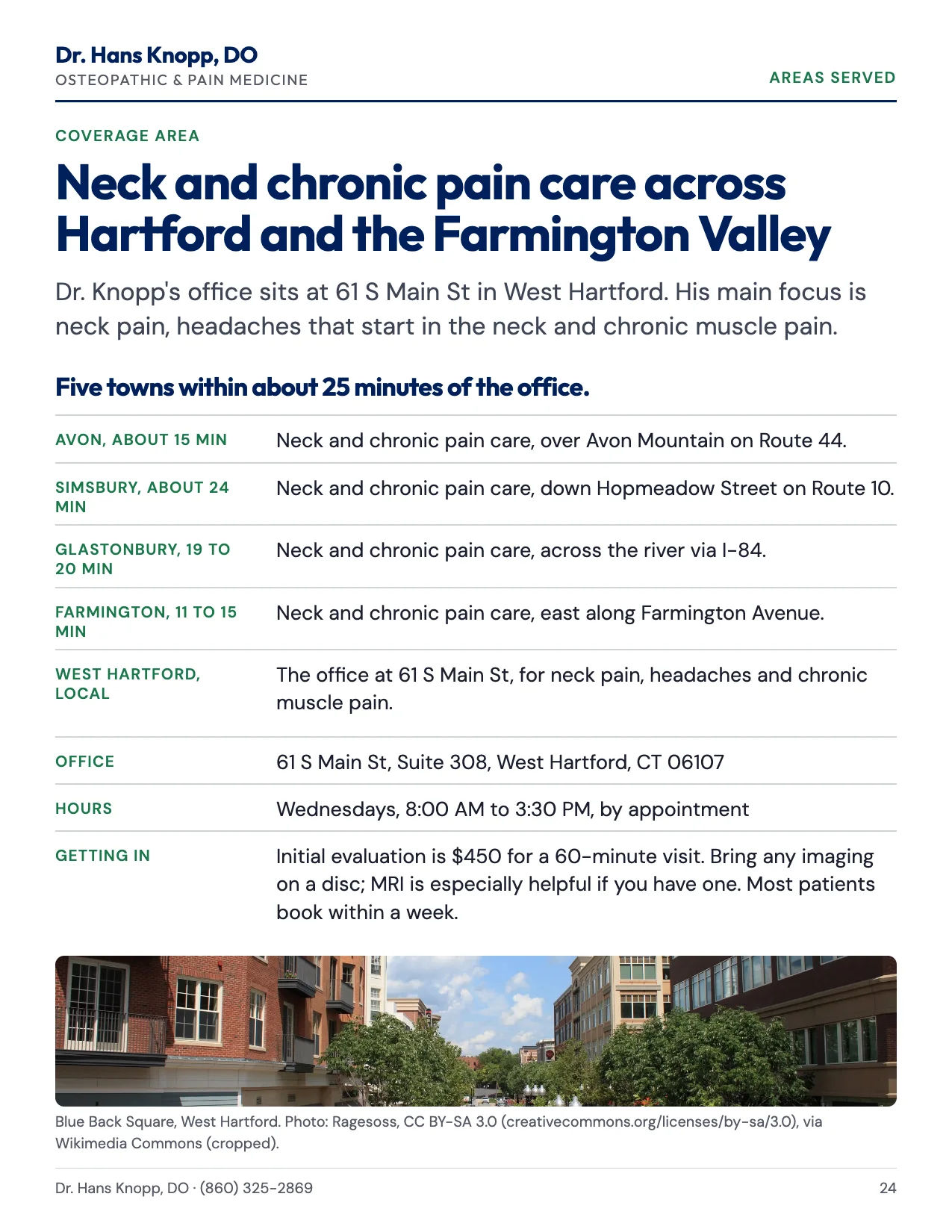
Dr. Hans Knopp, DO OSTEOPATHIC & PAIN MEDICINE AREAS SERVED COVERAGE AREA Neck and chronic pain care across Hartford and the Farmington Valley Dr. Knopp's office sits at 61 S Main St in West Hartford. His main focus is neck pain, headaches that start in the neck and chronic muscle pain. Five towns within about 25 minutes of the office. AVON, ABOUT 15 MIN Neck and chronic pain care, over Avon Mountain on Route 44. SIMSBURY, ABOUT 24 MIN Neck and chronic pain care, down Hopmeadow Street on Route 10. GLASTONBURY, 19 TO 20 MIN Neck and chronic pain care, across the river via I-84. FARMINGTON, 11 TO 15 MIN Neck and chronic pain care, east along Farmington Avenue. WEST HARTFORD, LOCAL The office at 61 S Main St, for neck pain, headaches and chronic muscle pain. OFFICE 61 S Main St, Suite 308, West Hartford, CT 06107 HOURS Wednesdays, 8:00 AM to 3:30 PM, by appointment GETTING IN Initial evaluation is $450 for a 60-minute visit. Bring any imaging on a disc; MRI is especially helpful if you have one. Most patients book within a week. Blue Back Square, West Hartford. Photo: Ragesoss, CC BY-SA 3.0 (creativecommons.org/licenses/by-sa/3.0), via Wikimedia Commons (cropped).
Page 25: When it is not an office visit
Dr. Hans Knopp, DO OSTEOPATHIC & PAIN MEDICINE SAFETY SAFETY When it is not an office visit AFTER AN INJURY After an injury, get care right away. FEVER AND STIFF NECK Fever with a stiff neck and headache is an emergency. MedlinePlus lists a fever and headache with a neck so stiff "that you cannot touch your chin to your chest" among symptoms that may indicate meningitis, and advises calling 911 or going to a hospital. SUDDEN HEADACHE MedlinePlus says a headache that "comes on suddenly and is explosive or violent" needs medical attention right away, as it "may be due to a ruptured blood vessel in the brain," and advises calling 911 or going to the nearest emergency room. NERVE WARNING SIGNS Progressive leg weakness, numbness in the groin or saddle area, new difficulty starting to urinate or emptying the bladder, or new loss of bladder or bowel control mean emergency care, not an office visit. Medical Disclaimer The content published on this website is provided for general informational and educational purposes only. It is not intended as, and does not constitute, medical advice, diagnosis, or treatment recommendations. Nothing on this site should be interpreted as a substitute for professional medical judgment from a licensed physician who has examined you directly. Use of this website does not create a physician-patient relationship between you and Dr. Hans Knopp, DO, or this practice. Individual results and outcomes vary. No Emergency Services If you are experiencing a medical emergency, chest pain, difficulty breathing, loss of consciousness, or any other life-threatening condition, call 911 or go to your nearest emergency room immediately.
Page 26: Questions about pain and OMT
Dr. Hans Knopp, DO OSTEOPATHIC & PAIN MEDICINE FAQ FREQUENTLY ASKED QUESTIONS Questions about pain and OMT What causes neck pain that won't go away? Common sources include strained or tender muscles, arthritis in the small facet joints at the back of the neck, and an irritated nerve root in the neck. They can feel alike and they are treated differently, so the first visit is spent working out which one, or which combination, you have. Is Botox used for neck pain? Botox is one of the tools Dr. Knopp may use for some patients with neck pain, headache or facial pain. Whether you are a candidate is discussed at the visit. The FDA label lists specific approved uses, including prevention of headaches in adults with chronic migraine and cervical dystonia, so the label alone does not answer whether it suits a given neck problem. What is a cervicogenic headache? The International Headache Society describes it as a "Headache caused by a disorder of the cervical spine and its component bony, disc and/or soft tissue elements, usually but not invariably accompanied by neck pain." In plain words, the headache is coming from the neck rather than from the brain's own headache pathways. What is a trigger point? A 2015 review in PM&R describes a myofascial trigger point as "a discrete, hyperirritable nodule in a taut band of skeletal muscle which is palpable and tender during physical examination." Pressing on an active one can reproduce the pain a person already knows, which is part of how it is found on exam. Can OMT help if I've already had spine surgery? It may. Surgery addresses a specific structural problem, a herniated disc, a stenotic segment, but it doesn't correct the compensatory patterns that developed above and below the surgical level. Patients who had a lumbar fusion can develop adjacent segment loading issues, pelvic tilt, and hip flexor dysfunction. Dr. Knopp's evaluation looks for these patterns. Once the surgeon has cleared the hardware and healing, OMT can be used for those post-surgical compensation patterns. Techniques are selected carefully to avoid direct manipulation at the surgical site; the work happens in the segments above and below, and in the pelvis and hips.
Page 27: Questions about PRP
Dr. Hans Knopp, DO OSTEOPATHIC & PAIN MEDICINE FAQ FREQUENTLY ASKED QUESTIONS Questions about PRP What is PRP, and is it the same as the "stem cell therapy" I've seen advertised? PRP (platelet-rich plasma) is made from your own blood. A sample is drawn, centrifuged to concentrate the platelets several times above baseline, and injected into the damaged tissue the same day. Platelets release growth factors, PDGF, TGF-β, VEGF, IGF-1, that are thought to signal tissue repair and matrix remodeling. It is autologous (your own cells), minimally manipulated, and prepared the same day. It is not the same as the "stem cell therapy" advertised at many clinics, which typically involves allogeneic (donor) amniotic or umbilical products. Those products are not FDA-approved for orthopedic conditions, according to the FDA consumer information on regenerative medicine therapies, which lists amniotic fluid and umbilical cord blood products among unapproved products. Dr. Knopp uses only autologous, same-day PRP preparations, your own blood, never donor material. Is PRP better than cortisone for tendon injuries? For lateral epicondylitis (tennis elbow), a randomized trial (Peerbooms et al., 2010) and its two-year follow-up (Gosens et al., 2011) found more patients improved with PRP than with cortisone. Evidence for other tendons, including the rotator cuff and gluteal tendons, is mixed or inconclusive. Cortisone provides faster short-term relief, often within days, and repeated injections may weaken tendon structure. PRP works more slowly. For acute inflammation, cortisone remains appropriate. Which option fits depends on the tendon and the patient. Can PRP delay or prevent knee replacement surgery? In patients with grade I-III knee osteoarthritis, trials found improvement in pain and function at 6 and 12 months on average, though not everyone responds. The trials have not shown that PRP delays joint replacement. It does not regenerate lost cartilage or reverse bone-on-bone arthritis (grade IV). Is PRP covered by insurance? PRP is generally not covered by insurance for orthopedic indications. All regenerative procedures are private pay.
Page 28: Activity after PRP, and referrals
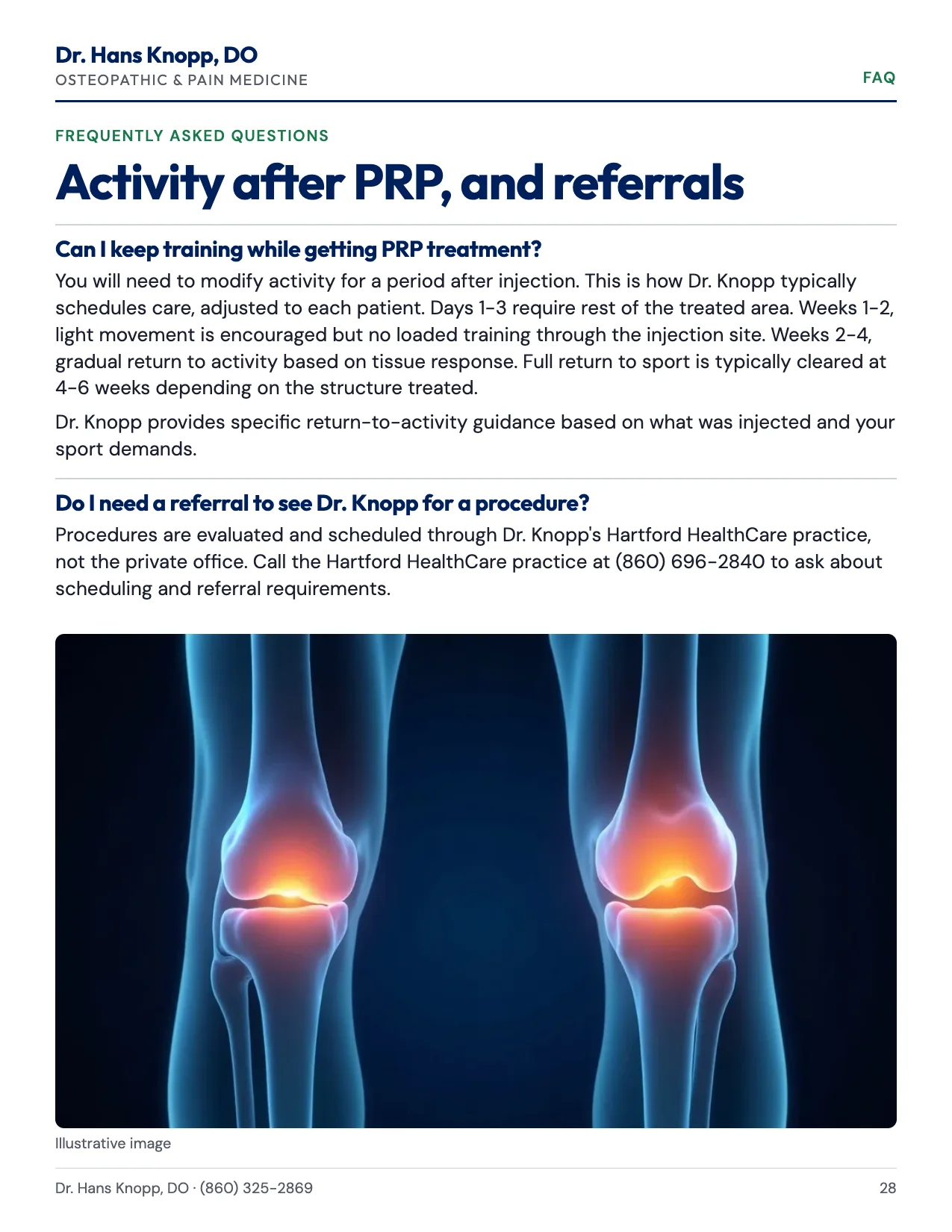
Dr. Hans Knopp, DO OSTEOPATHIC & PAIN MEDICINE FAQ FREQUENTLY ASKED QUESTIONS Activity after PRP, and referrals Can I keep training while getting PRP treatment? You will need to modify activity for a period after injection. This is how Dr. Knopp typically schedules care, adjusted to each patient. Days 1-3 require rest of the treated area. Weeks 1-2, light movement is encouraged but no loaded training through the injection site. Weeks 2-4, gradual return to activity based on tissue response. Full return to sport is typically cleared at 4-6 weeks depending on the structure treated. Dr. Knopp provides specific return-to-activity guidance based on what was injected and your sport demands. Do I need a referral to see Dr. Knopp for a procedure? Procedures are evaluated and scheduled through Dr. Knopp's Hartford HealthCare practice, not the private office. Call the Hartford HealthCare practice at (860) 696-2840 to ask about scheduling and referral requirements. Illustrative image
Page 29: Sources
Dr. Hans Knopp, DO OSTEOPATHIC & PAIN MEDICINE SOURCES REFERENCES Sources PAGE 11 Migliorini F, et al. Management of sacroiliac joint pain: current concepts. European Journal of Orthopaedic Surgery & Traumatology, 2025. https://pmc.ncbi.nlm.nih.gov/articles/PMC12095441 PAGE 12 American Academy of Orthopaedic Surgeons. Cervical Radiculopathy (Pinched Nerve). OrthoInfo. https://www.orthoinfo.org/en/diseases--conditions/cervical-radiculopathy-pinched-nerve/ PAGE 13 Gross A, et al. Manipulation and mobilisation for neck pain contrasted against an inactive control or another active treatment. Cochrane Database of Systematic Reviews, 2015. https://pmc.ncbi.nlm.nih.gov/articles/PMC10883412/ PAGE 13 Gross A, et al. Exercises for mechanical neck disorders. Cochrane Database of Systematic Reviews, 2015. https://pmc.ncbi.nlm.nih.gov/articles/PMC9508492/ PAGE 13 Alvarez DJ, Rockwell PG. Trigger Points: Diagnosis and Management. American Family Physician, 2002. https://www.aafp.org/pubs/afp/issues/2002/0215/p653.html PAGE 13 BOTOX (onabotulinumtoxinA) prescribing information. DailyMed, U.S. National Library of Medicine. https://dailymed.nlm.nih.gov/dailymed/drugInfo.cfm?setid=33d066a9-34ff-4a1a-b38b-d10983df3300 PAGES 14 AND 26 BOTOX (onabotulinumtoxinA) prescribing information, Indications and Usage. Allergan, via DailyMed. https://dailymed.nlm.nih.gov/dailymed/lookup.cfm?setid=33d066a9-34ff-4a1a-b38b-d10983df3300 PAGES 14 AND 26 International Headache Society. ICHD-3, 11.2.1 Cervicogenic headache. https://ichd-3.org/11-headache-or-facial-pain-attributed-to-disorder-of-the-cranium-neck-eyes-ears-nose-sinuses-teeth-mouth-or-other-facial-or-cervical-structure/11-2-headache-attributed-to-disorder-of-the-neck/11-2-1-cervicogenic-headache/ PAGE 14 International Headache Society. ICHD-3, 13.4 Occipital neuralgia. https://ichd-3.org/13-painful-lesions-of-the-cranial-nerves-and-other-facial-pain/13-4-occipital-neuralgia/ PAGES 15 AND 26 Shah JP, et al. Myofascial Trigger Points Then and Now: A Historical and Scientific Perspective. PM&R, 2015;7(7):746-761. https://pmc.ncbi.nlm.nih.gov/articles/PMC4508225 PAGE 15 Ahiskalioglu EO, et al. Pneumothorax after trigger point injection: A case report and review of literature. Journal of Back and Musculoskeletal Rehabilitation, 2016. https://doi.org/10.3233/bmr-160666 PAGE 19 PRP in knee osteoarthritis meta-analysis, Cureus (2025). https://pmc.ncbi.nlm.nih.gov/articles/PMC12596915/ PAGE 19 AAOS Management of Rotator Cuff Injuries guideline (2025). https://www.aaos.org/rccpg2025 PAGES 19 AND 27 Peerbooms et al., 2010. https://pubmed.ncbi.nlm.nih.gov/20448192/ PAGES 19 AND 27 Gosens et al., 2011. https://pubmed.ncbi.nlm.nih.gov/21422467/ PAGE 25 MedlinePlus Medical Encyclopedia. Neck pain. U.S. National Library of Medicine. https://medlineplus.gov/ency/article/003025.htm PAGE 25 MedlinePlus Medical Encyclopedia. Headache. U.S. National Library of Medicine. https://medlineplus.gov/ency/article/003024.htm
Page 30: Contact
Dr. Hans Knopp, DO CONTACT DR. KNOPP Reach the office to discuss your condition or schedule an appointment. (860) 325-2869 61 S Main St, Suite 308 West Hartford, CT 06107 Wednesdays, 8:00 AM to 3:30 PM, by appointment drknopp.com/contact Hospital procedures: Hartford HealthCare practice, (860) 696-2840 The information provided on this website is for general informational purposes only and does not constitute medical advice. No doctor-patient relationship is established through use of this site. Illustrative image