Keep the miles, lose the pain
PRP, OMT, and interventional pain care for Connecticut runners. Dr. Hans Knopp, DO treats runner's knee, shin splints, plantar fasciitis, Achilles, IT band, and hip tendinopathy, and is straight about where regenerative injections help and where load and mechanics do the real work. West Hartford office, evaluations within a week.
A pain physician who runs the numbers, not just the injection
Running is one of the highest-injury endurance sports there is: roughly 40 to 45 percent of runners are dealing with an injury at any given point. The pattern is predictable and mostly overuse: patellofemoral pain (runner's knee) is the single most common, followed by shin splints, plantar fasciitis, IT band syndrome, and Achilles tendinopathy. Almost all of it comes down to load outpacing tissue capacity, and a driver somewhere up the chain (hip, foot, or training error) that keeps it coming back.
Dr. Knopp built a concierge pain practice for exactly this kind of patient. Direct phone access, full-length evaluations, hands-on osteopathic care, and PRP regenerative therapy in the office. He is also candid: running injuries are won mostly with load management, mechanics, and targeted rehab, with regenerative injection reserved for the tissue that genuinely needs it. When fluoroscopy or sedation is needed for an interventional procedure, he performs it at Hartford HealthCare. Same physician across both settings.
Board-certified, dual specialty
ABPMR in Physical Medicine & Rehabilitation plus Pain Medicine. 25 PubMed citations.
Evaluations within a week
No three-month wait list. If a goal race is on the calendar, the eval needs to happen now.
Direct line to your doctor
Concierge model. No call center, no triage nurse. Reach Dr. Knopp's team directly at (860) 325-2869.
What Dr. Knopp treats for runners
A focused, evidence-based approach, and an honest one. Some of these respond well to ultrasound-guided PRP; others are won with load management, mechanics, and rehab. Dr. Knopp tells you which is which.
Runner's knee (patellofemoral pain)
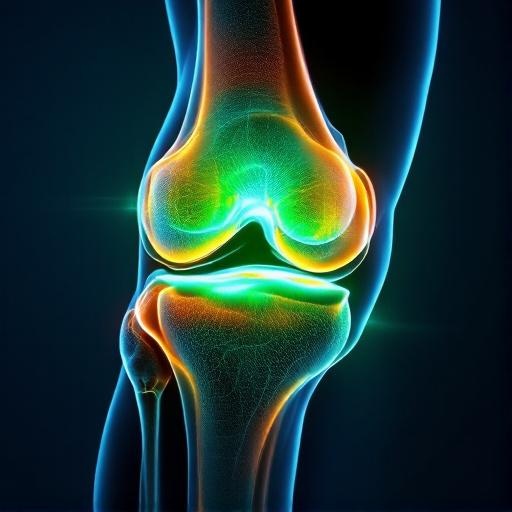
Patellofemoral pain is the most common running injury, and the pain at the front of the knee is usually a symptom of what is happening above and below it. Runners with it are typically weak in the gluteal and hip muscles, which lets the knee track poorly under load. The best-supported treatment is not rest or an injection: systematic-review evidence shows hip-plus-knee strengthening beats knee strengthening alone for reducing pain and restoring activity, and exercise is the one approach proven to help. Dr. Knopp assesses the hip, knee, and foot as one chain, uses OMT to free up what is restricted, and coaches the load and mechanics change that actually fixes it. Injection is not first-line here; for a separate, genuinely chronic patellar tendinopathy, LR-PRP can support tendon healing after loading has stalled.
Plantar fasciitis
Chronic plantar fasciitis that has resisted stretching, orthotics, and load changes is one of the better regenerative targets: ultrasound-guided PRP has moderate-quality evidence for improving pain and function at six months and a year, and some studies favor it over cortisone for durable relief. Dr. Knopp confirms the diagnosis on ultrasound and treats the fascia directly.
Achilles tendinopathy
Heavy, slow eccentric loading is the proven first-line treatment, and Dr. Knopp starts there. The evidence for PRP in Achilles tendinopathy is genuinely mixed, with several trials showing no advantage over saline, so injection is reserved for stubborn cases after honest conservative care. A sudden pop with weakness needs urgent evaluation to rule out a rupture.

Shin splints (medial tibial stress syndrome)
Shin splints are not a nuisance to run through. Medial tibial stress syndrome is an early point on the same continuum that ends in a tibial stress fracture, so the first job is to decide where on that continuum you are, with MRI or a bone scan when the exam or history raises the flag. The usual drivers are a training-load error, overpronation or a collapsing arch, and poor hip control that changes how the lower leg loads. Treatment is relative rest and a graded return, gait and cadence work, foot and hip strengthening, and, where useful, shockwave therapy. This is a load-and-mechanics problem, not a PRP problem, and Dr. Knopp will tell you so plainly rather than sell you an injection.
IT band syndrome & gluteal tendinopathy
Iliotibial band syndrome and gluteal (gluteus medius) tendinopathy are hip-driven overuse injuries that punish weak or poorly coordinated hip mechanics. Rehab and OMT come first; for chronic gluteal tendinopathy, PRP has supportive data and is a reasonable option when loading alone stalls.
Running-related low back & SI pain
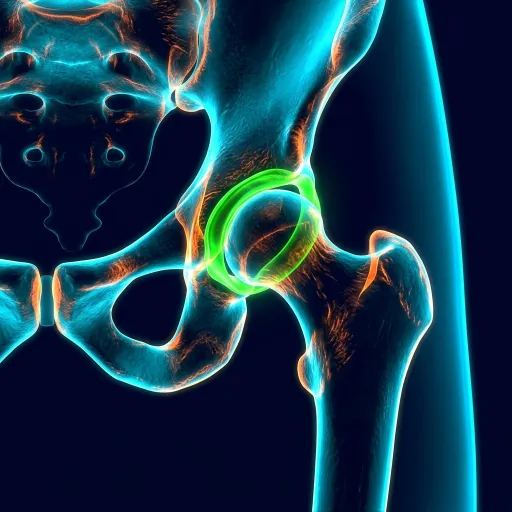
Repetitive impact and a stiff thoracic spine or hip can leave the lumbar spine and sacroiliac joint doing more than their share. Dr. Knopp evaluates the full chain with OMT and treats facet or SI-mediated pain directly. The same drivers show up across sports, which is why running injuries keep coming back.
Where PRP fits, and where it does not
PRP is your own platelets concentrated several times above baseline and injected into damaged tissue under ultrasound guidance. The growth factors released (PDGF, TGF-β, VEGF, IGF-1) recruit local repair cells and start matrix remodeling. For runners, honesty matters more than enthusiasm: PRP has the most support for chronic plantar fasciitis and gluteal tendinopathy, a reasonable case for chronic patellar tendinopathy, and genuinely mixed evidence for Achilles tendinopathy.
Just as important is what PRP does not fix. Shin splints, stress injuries, and most cases of runner's knee are training-load and mechanics problems, and an injection into the wrong problem wastes your money and your season. Dr. Knopp diagnoses the actual driver first, treats mechanics and load, and uses regenerative injection only where the tissue and the evidence justify it.
When PRP is the right call, all injections are performed under live ultrasound. A typical tendon or fascia healing response runs 4 to 6 weeks, with a graded return to running over the following weeks. Dr. Knopp builds the timeline around your training block and goal races.
Built for the CT running community
Greater Hartford runs. The Hartford Marathon anchors a busy fall racing calendar, the West Hartford Reservoir and the region's rail trails are full most mornings, and there is a deep bench of clubs and training groups. Dr. Knopp's office at 61 S Main St in West Hartford sits in the middle of that community.
The Hartford Marathon
The Eversource Hartford Marathon and its half and relay events draw thousands every October and set the training calendar for much of the region. Marathon build-ups are where mileage errors turn into injuries, and where a fast, honest evaluation matters most.
Reservoir & rail trails
The MDC West Hartford Reservoir and the Farmington Canal Heritage Trail are the region's default long-run routes. Soft-surface options exist, but high weekly volume on any surface still finds the weak link in the chain.
Clubs & training groups
Greater Hartford has an active club and group-training scene across every distance and pace. Group mileage is great for consistency and hard on runners who ramp up to keep pace with the pack.
Masters & lifelong runners
Many local runners have been at it for decades, and tendon and joint tissue changes with the miles. Achilles trouble, plantar fasciitis, and knee tendinopathy in the masters runner have real, evidence-guided options.
What it costs
This is a private-pay practice. Dr. Knopp does not bill insurance, Medicare, or Medicaid for office visits. Pricing is published upfront, with no surprise bills. HSA and FSA accepted. Interventional procedures performed at Hartford HealthCare (epidurals, RFA, nerve blocks) are billed through the hospital and may be covered by your insurance separately.
Initial evaluation: $450
60 minutes. Full musculoskeletal and gait-chain exam, imaging review, OMT if appropriate, treatment plan. Bring any MRI or CT discs.
Follow-up visit: $250
30 minutes. OMT, treatment plan adjustment, progress evaluation. Many runners are seen every 2 to 4 weeks during active treatment.
PRP injection: $1,250 to $3,000
Per session. Range reflects single-site vs multi-site preparation and ultrasound guidance complexity. Estimate provided at evaluation.
Common questions from CT runners
My knee hurts every time my mileage goes up. Do I need to stop running?
Usually not entirely. Patellofemoral pain, the most common running injury, is typically a load and mechanics problem, not structural damage. Dr. Knopp evaluates the hip, knee, and foot as one chain, adjusts training load, and uses OMT to restore the mobility that is throwing the knee off. Most runners keep running at a modified volume while it settles.
Is PRP proven for Achilles tendinopathy?
The honest answer is that the evidence is mixed. Several well-designed trials found no clear advantage of PRP over a saline injection for Achilles tendinopathy, and heavy, slow eccentric loading remains the first-line treatment. Dr. Knopp starts with a loading program and OMT, and considers PRP only for stubborn cases after conservative care has genuinely failed. He will tell you where the evidence is strong and where it is not.
I have plantar fasciitis that will not go away. What are my options?
For chronic plantar fasciitis that has not responded to stretching, orthotics, and load management, ultrasound-guided PRP has moderate-quality evidence for improving pain and function at six months and a year, and some studies favor it over cortisone for durable relief. Dr. Knopp confirms the diagnosis on ultrasound and treats the fascia directly.
Do you take my insurance?
No, this is a private-pay practice. Dr. Knopp does not bill insurance, Medicare, or Medicaid for office visits or OMT. Pricing is transparent. HSA and FSA accepted. If you need a procedure performed at Hartford HealthCare (epidural, RFA, nerve block, Sprint PNS), those are billed through the hospital and your insurance may cover them separately.
I have a marathon in eight weeks. Can you help me get to the start line?
Often, yes, and most patients are seen within a week. Tell the office your race date. Dr. Knopp builds the plan around it, treating the injured tissue while keeping whatever training volume is safe, and is honest when a goal race is not realistic so you do not turn a manageable injury into a lost season.
Ready to be evaluated
Most runners book within a week. Initial evaluation is $450 for a 60-minute visit. Bring any imaging on a disc; MRI is especially helpful if you have one.
Office: 61 S Main St, Suite 308, West Hartford, CT 06107
Hours: Mon to Fri 8:00 AM to 5:00 PM