Stay on the court, not on the sidelines
PRP, OMT, and interventional pain care for Connecticut racquet and paddle players. Dr. Hans Knopp, DO treats the tennis elbow, rotator cuff, Achilles, knee, and wrist injuries that come with pickleball and tennis, especially for players over 50. West Hartford office, evaluations within a week.
A pain physician for the fastest-growing sport in Connecticut
Pickleball has exploded, and so have the injuries. Emergency-department visits for pickleball rose from roughly 1,300 in 2014 to more than 24,000 in 2023, and about nine in ten of those injuries are in players 50 and older. Tennis has a similar overuse profile. The common thread is chronic tendon load: lateral and medial epicondylitis at the elbow, rotator cuff tendinopathy at the shoulder, Achilles trouble at the ankle, and patellar tendinopathy and arthritis flares at the knee. These are precisely the problems that respond to a biological repair signal rather than to rest that never quite sticks.
Dr. Knopp built a concierge pain practice for exactly this kind of patient. Direct phone access, full-length evaluations, hands-on osteopathic care, and PRP regenerative therapy in the office. When fluoroscopy or sedation is needed for an interventional procedure (epidural, RFA, nerve block, Sprint PNS), he performs them at Hartford HealthCare. Same physician across both settings.
Board-certified, dual specialty
ABPMR in Physical Medicine & Rehabilitation plus Pain Medicine. 25 PubMed citations.
Evaluations within a week
No three-month wait list. If you play three mornings a week, the eval needs to happen now.
Direct line to your doctor
Concierge model. No call center, no triage nurse. Reach Dr. Knopp's team directly at (860) 325-2869.
What Dr. Knopp treats for racquet & paddle players
A focused, evidence-based approach. Most of these conditions respond to ultrasound-guided PRP injection, often combined with osteopathic manipulation. Acute fractures from a fall need urgent care first; the stiffness and tendinopathy that follow are what Dr. Knopp treats.
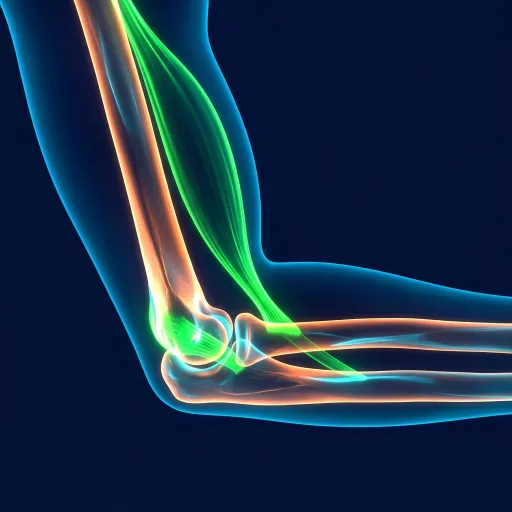
Tennis & golfer's elbow (epicondylitis)
The signature racquet injury. Lateral epicondylitis (tennis elbow) affects as many as a third of tennis players over time, and pickleball adds its own share. It is a chronic tendon-origin problem, not simple inflammation. Cortisone helps for a few weeks and fades; for pain that has lasted months, LR-PRP to the common tendon origin under ultrasound has better long-term results in randomized trials. See PRP for tennis elbow.
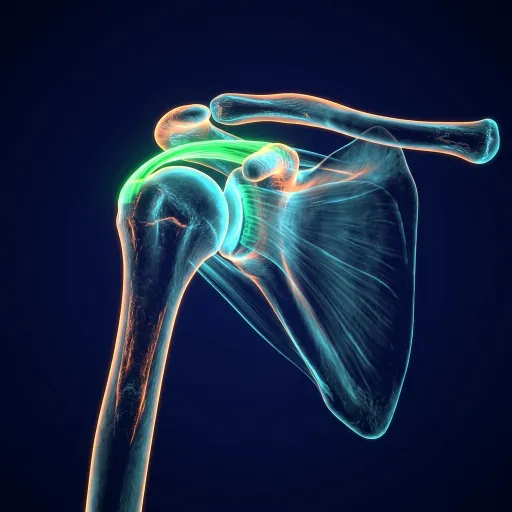
Rotator cuff tendinopathy & tears
Overhead serves, put-aways, and repetitive dinking load the rotator cuff. Partial-thickness tears, supraspinatus tendinopathy, and impingement often respond to ultrasound-guided PRP, which can defer or replace arthroscopic repair. Full-thickness tears need surgical evaluation. See PRP for rotator cuff tears.
Achilles tendinopathy & partial tears
The sudden lunges and direction changes of pickleball and tennis are hard on the Achilles, and a sudden pop can mean a rupture that needs urgent care. Chronic Achilles tendinopathy and partial tears, once a rupture is ruled out, respond to ultrasound-guided PRP and a structured loading program. Dr. Knopp confirms the diagnosis on exam and imaging before treating.
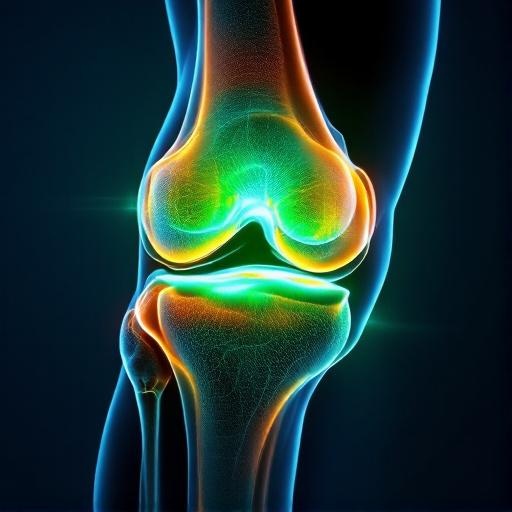
Patellar tendinopathy & arthritis flares
Split-steps and quick stops load the patellar tendon and aggravate existing arthritis. For patellar tendinopathy, LR-PRP supports tendon healing; for mild-to-moderate knee osteoarthritis, current meta-analyses favor leukocyte-poor PRP over hyaluronic acid or cortisone. See PRP for knee osteoarthritis.
Wrist tendinopathy & TFCC pain
Paddle and racquet impact loads the wrist, and falls, the most common cause of pickleball fractures, add acute injury. Once a fracture is ruled out, ulnar-sided wrist pain, TFCC irritation, and wrist tendinopathy that has not settled with rest and bracing are treated under ultrasound guidance.
Low back & hip pain from the ready position
Hours in a flexed, reactive stance load the lumbar spine and hips. Facet-mediated back pain, gluteal tendinopathy, and hip impingement respond to a combination of OMT, targeted injection, and, for confirmed chronic facet pain, radiofrequency ablation at Hartford HealthCare.
Why PRP fits court injuries
PRP is your own platelets concentrated several times above baseline and injected into damaged tissue under ultrasound guidance. The growth factors released (PDGF, TGF-β, VEGF, IGF-1) recruit local repair cells, drive new blood-vessel growth, and start matrix remodeling. For racquet and paddle players, the fit is specific: chronic elbow, shoulder, Achilles, and knee tendon problems respond to a biological repair signal better than to repeated cortisone, which can weaken tendon over time, or to surgery, which takes you off the court for months.
Preparation matters clinically. Dr. Knopp uses LP-PRP (leukocyte-poor) for intra-articular work like the knee joint where excess inflammation is counterproductive, and LR-PRP (leukocyte-rich) for tendon work like epicondylitis and Achilles tendinopathy where the inflammatory phase is part of healing. All injections are performed under live ultrasound. Needle position directly affects results, and a blind injection is not appropriate care for an active player.
Typical recovery timeline: 4 to 6 weeks for a tendon healing response, back to light hitting at 6 to 8 weeks, and a full return for most upper-body work at 10 to 12 weeks. Achilles and knee work runs longer. Dr. Knopp builds the timeline around your playing schedule.
Built for the CT court community
Pickleball courts have gone in across the Farmington Valley faster than towns can stripe them, and the tennis clubs have been busy for decades. Dr. Knopp's office at 61 S Main St in West Hartford sits in the middle of it, serving the range of players who keep the courts full from spring through the indoor winter season.
Town pickleball courts
West Hartford, Simsbury, Farmington, Avon, and Bloomfield have all added dedicated or striped pickleball courts, many with morning open-play groups that meet several times a week. High-frequency play is where overuse injuries come from.
Tennis clubs & indoor facilities
The area's private clubs and indoor tennis facilities keep players on the court year-round, which means the elbow and shoulder never get a true off-season to recover. Year-round load is a double-edged sword.
The 50-plus player
Most racquet and paddle injuries seen in emergency departments are in players over 50, and this is the core of Dr. Knopp's practice. Tendinopathy, arthritis flares, and slow-healing tissue in an active older player have real non-surgical options.
Return-to-play planning
Most players do not want to stop; they want to keep playing safely. Dr. Knopp treats the injured tissue and builds a plan that rests only what needs rest, so open play three mornings a week stays on the calendar.
What it costs
This is a private-pay practice. Dr. Knopp does not bill insurance, Medicare, or Medicaid for office visits. Pricing is published upfront, with no surprise bills. HSA and FSA accepted. Interventional procedures performed at Hartford HealthCare (epidurals, RFA, nerve blocks) are billed through the hospital and may be covered by your insurance separately.
Initial evaluation: $450
60 minutes. Full musculoskeletal exam, imaging review, OMT if appropriate, treatment plan. Bring any MRI or CT discs.
Follow-up visit: $250
30 minutes. OMT, treatment plan adjustment, progress evaluation. Many in-season players are seen every 2 to 4 weeks during active treatment.
PRP injection: $1,250 to $3,000
Per session. Range reflects single-site vs multi-site preparation and ultrasound guidance complexity. Estimate provided at evaluation.
Common questions from CT racquet & paddle players
I picked up pickleball at 60 and now my elbow and shoulder hurt. Is that normal?
It is common, and it is treatable. More than nine in ten pickleball injuries seen in emergency departments are in players 50 and older, and the overuse injuries, tennis and golfer's elbow, rotator cuff tendinopathy, and Achilles trouble, are exactly the tendon problems that respond to ultrasound-guided PRP and osteopathic care. Dr. Knopp diagnoses the specific tendon and treats it, rather than telling you to stop playing.
Can PRP fix tennis elbow that cortisone did not?
Often, yes. For lateral epicondylitis, cortisone tends to help in the first month and then fade, while randomized-trial evidence favors PRP for longer-term pain relief and function past six months. Dr. Knopp injects the common extensor origin under ultrasound guidance and pairs it with load management so the tendon is not re-aggravated at the next open-play session.
I felt a pop in my calf on the court. What should I do?
A sudden pop at the back of the ankle or calf can be an Achilles tear, which is a time-sensitive injury. If you cannot push off, or you have significant swelling and weakness, seek urgent evaluation to rule out a full rupture, which may need surgical consultation. Partial tears and chronic Achilles tendinopathy, on the other hand, are exactly what Dr. Knopp treats with ultrasound-guided injection and rehab.
Do you take my insurance?
No, this is a private-pay practice. Dr. Knopp does not bill insurance, Medicare, or Medicaid for office visits or OMT. Pricing is transparent. HSA and FSA accepted. If you need a procedure performed at Hartford HealthCare (epidural, RFA, nerve block, Sprint PNS), those are billed through the hospital and your insurance may cover them separately.
How fast can I get seen? I play three times a week.
Most patients are seen within a week of calling. Tell the office how often you play and what you are training for, and Dr. Knopp builds a plan that keeps you on the court where it is safe to do so and rests only the tissue that needs it.
Ready to be evaluated
Most court patients book within a week. Initial evaluation is $450 for a 60-minute visit. Bring any imaging on a disc; MRI is especially helpful if you have one.
Office: 61 S Main St, Suite 308, West Hartford, CT 06107
Hours: Mon to Fri 8:00 AM to 5:00 PM