Dr. Knopp's office is at 61 S Main St in West Hartford, just down the street from Rockledge Golf Club. Direct access to a board-certified pain physician. No front desk, no insurance maze, no rushed appointments. Specializing in PRP regenerative therapy, osteopathic manipulation, and interventional pain procedures.
West Hartford has plenty of medical practices, but most pain care here runs through hospital systems: 15-minute slots, rotating physicians, and a long queue for procedures. Dr. Knopp built a different model. West Hartford patients get a board-certified pain physician on the phone directly, full-length evaluations, and a treatment plan that combines hands-on osteopathic care with PRP regenerative therapy and (when appropriate) hospital-based interventional procedures at Hartford HealthCare. The office is at 61 S Main St, Suite 308, with free on-site parking.
Right in West Hartford center. Free on-site parking. Walk in for your evaluation.
ABPMR in Physical Medicine & Rehabilitation plus Pain Medicine. 25 PubMed citations.
Concierge model. No call center. Reach Dr. Knopp's team directly at (860) 325-2869.
A focused, evidence-based approach. Conditions span chronic musculoskeletal pain, sports and overuse injuries, and post-surgical pain that hasn't resolved with conventional care.
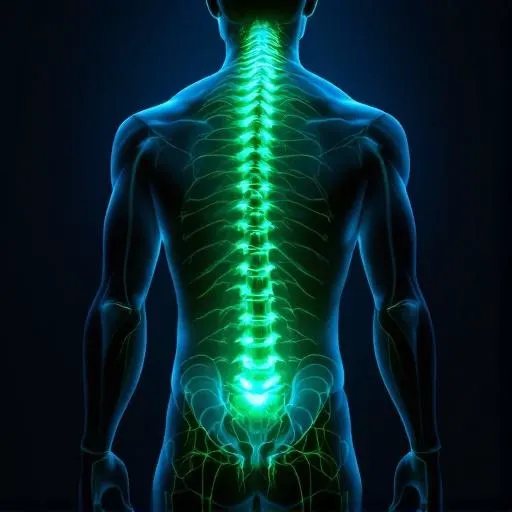
Lumbar radiculopathy, facet-mediated pain, sacroiliac joint dysfunction. OMT addresses structural drivers; epidural injections, RFA, and SI joint injections are available at Hartford HealthCare when conservative care isn't enough.
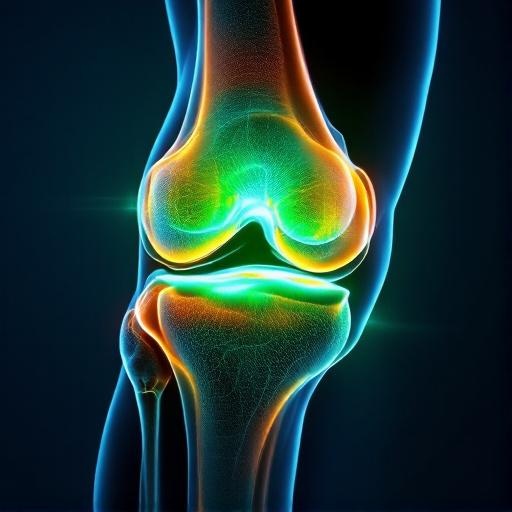
PRP injection is the front-line regenerative option for grade I to III knee OA. Evidence base includes the 2026 AAPM&R consensus guidance recommending PRP for knee OA in patients seeking an alternative to repeated cortisone or surgery.
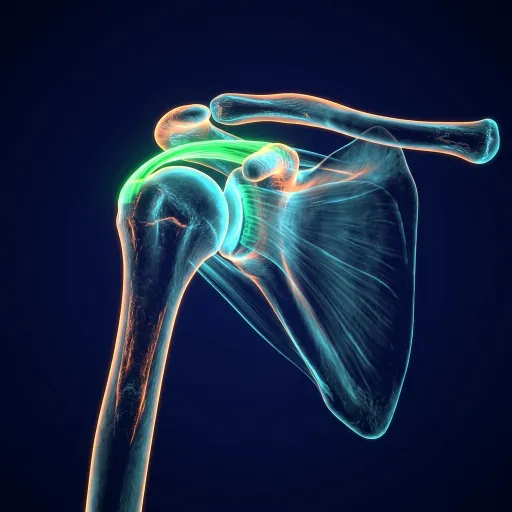
Partial-thickness rotator cuff tears, supraspinatus tendinopathy, and chronic impingement respond well to ultrasound-guided PRP. For the right candidate, this can defer or replace surgical repair. See PRP for rotator cuff tears.
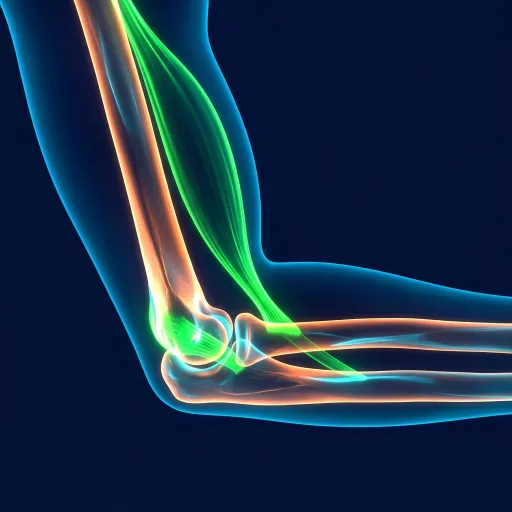
Chronic tendinopathy that hasn't resolved with rest, physical therapy, or steroid injection often responds to LR-PRP (leukocyte-rich platelet preparation), which is tailored for tendon healing.
West Hartford golfers play at Rockledge Golf Club (289 S Main St, literally down the street from the office) and the prestigious private Hartford Golf Club. Repetitive rotational load is hard on shoulders, elbows, lumbar facets, and hips. The injuries that knock golfers out of their season are often the same conditions that PRP treats best. Walk down S Main St from your tee time straight to your evaluation.
Partial supraspinatus tears and impingement from repetitive overhead and rotational load. PRP under ultrasound guidance, often combined with OMT for thoracic mobility.
Golfer's elbow (medial) and tennis elbow (lateral) tendinopathy. LR-PRP to the common flexor or extensor origin is well-supported by orthobiologics literature.
The "back pain after 18 holes" pattern. OMT for the mechanical drivers; medial branch blocks and RFA at Hartford HealthCare for confirmed facet-mediated pain.
Lateral hip pain, gluteal tendinopathy, and grade I to III knee OA from years of walking 18 holes. PRP is the front-line regenerative option for both.
West Hartford sends Kingswood-Oxford, Hall, and Conard players onto the ice every winter, and adult-league hockey at Veterans Memorial Skating Rink keeps the patient pipeline going year-round. AC joint injuries, labral tears, and chronic groin pain are routine reasons West Hartford patients book, often after a steroid injection that didn't hold and a referral that never moved. Local access to ultrasound-guided PRP and OMT cuts the wait.
Partial labral tears, AC joint sprains, and rotator cuff impingement from shooting load and board contact. Ultrasound-guided PRP and OMT for thoracic and scapular mechanics.
Femoroacetabular impingement, sports hernia, and labral pathology from edge-work and crossover mechanics. Diagnostic ultrasound, PRP for partial labral injury, and OMT for pelvic and lumbar coordination.
Adductor longus strain, chronic athletic pubalgia, and MCL sprain from skating posture and contact. LR-PRP at the tendon insertion plus a return-to-skate progression.
Facet-mediated low back pain and SI joint dysfunction from forward-flexed skating posture. OMT for the mechanical drivers, medial branch blocks and RFA at Hartford HealthCare for confirmed facet pain.
PRP is your own platelets concentrated 3 to 8 times above baseline and injected into damaged tissue under ultrasound guidance. The growth factors released (PDGF, TGF-β, VEGF, IGF-1) recruit local stem cells, drive angiogenesis, and initiate matrix remodeling. This is a biological repair signal, not an anti-inflammatory shortcut.
Preparation matters clinically. Dr. Knopp uses LP-PRP (leukocyte-poor) for intra-articular knee injections where excess inflammation is counterproductive, and LR-PRP (leukocyte-rich) for tendon work where the inflammatory phase is necessary for healing. All injections are performed under live ultrasound. Needle position directly affects efficacy, and "blind" injection is not appropriate care.
PRP is also distinct from the "stem cell therapy" advertised at unregulated clinics, which typically uses allogeneic donor amniotic or umbilical products that are not FDA-approved for orthopedic use. Dr. Knopp uses only autologous, same-day preparations from your own blood.
This is a private-pay practice. Dr. Knopp does not bill insurance, Medicare, or Medicaid for office visits. Pricing is published upfront, with no surprise bills. HSA and FSA accepted. Interventional procedures performed at Hartford HealthCare (epidurals, RFA, nerve blocks) are billed through the hospital and may be covered by your insurance separately.
60 minutes. Full musculoskeletal exam, imaging review, OMT if appropriate, treatment plan. Bring any MRI or CT discs.
30 minutes. OMT, treatment plan adjustment, progress evaluation. Most patients are seen monthly during active treatment.
Per session. Range reflects single-site vs multi-site preparation and ultrasound guidance complexity. Estimate provided at evaluation.
61 S Main St, Suite 308, West Hartford, CT 06107. Free on-site parking. Live directions: Google Maps to the office →
Probably yes if the diagnosis is right. The most common golf-related shoulder pattern is rotator cuff tendinopathy or a partial-thickness supraspinatus tear. Both respond well to ultrasound-guided PRP, especially for golfers who want to defer or avoid surgical repair. Dr. Knopp's office is on the same street as Rockledge (61 S Main St vs Rockledge at 289 S Main St), making it easy to combine an evaluation with your usual Saturday round. Not every shoulder pain is a PRP candidate; that's what the evaluation determines.
No, this is a private-pay practice. Dr. Knopp does not bill insurance, Medicare, or Medicaid for office visits or OMT. Pricing is transparent. HSA and FSA accepted. If you need a procedure performed at Hartford HealthCare (epidural steroid injection, RFA, nerve block, Sprint PNS), those are billed through the hospital and your insurance may cover them separately.
Dr. Knopp is happy to send notes and treatment summaries to your primary care physician with your authorization. Many West Hartford patients keep their PCP for general health and see Dr. Knopp specifically for pain and regenerative care. There is no requirement for a PCP referral.
Office-based care includes evaluation, OMT, and PRP injections under ultrasound guidance. Procedures requiring fluoroscopy or sedation (epidural steroid injections, radiofrequency ablation, nerve blocks, Sprint peripheral nerve stimulation, spinal cord stimulation) are performed by Dr. Knopp at the Hartford HealthCare Pain Treatment Center. You stay with the same physician across both settings.
Most West Hartford patients book within a week. Initial evaluation is $450 for a 60-minute visit. Bring any imaging on a disc; MRI is especially helpful if you have one.
Office: 61 S Main St, Suite 308, West Hartford, CT 06107
Hours: Mon to Fri 8:00 AM to 5:00 PM