HK

Get back on the ice without surgery

PRP, OMT, and interventional pain care for Connecticut hockey players. Dr. Hans Knopp, DO treats the shoulder, hip, groin, and lumbar spine injuries that knock skaters out for the season. Adult league, college, prep school, and former pros. West Hartford office, evaluations within a week.

A pain physician who understands the sport

Hockey is hard on the body. Repetitive overhead shooting load, the deep skating crouch, lateral cuts, board contact, and the simple mileage of years on the ice produce a predictable injury profile: rotator cuff and labrum work for the shoulder, FAI and labrum tears for the hip, adductor tendinopathy for the groin, lumbar facet pain for the back. Most of these don't need surgery. They need accurate diagnosis, ultrasound-guided injection, and a treatment plan that respects the season schedule.

Dr. Knopp built a concierge pain practice for exactly this kind of patient. Direct phone access, full-length evaluations, hands-on osteopathic care, and PRP regenerative therapy in the office. When fluoroscopy or sedation is needed for an interventional procedure (epidural, RFA, nerve block, Sprint PNS), he performs them at Hartford HealthCare. Same physician across both settings.

Board-certified, dual specialty

ABPMR in Physical Medicine & Rehabilitation plus Pain Medicine. 25 PubMed citations.

Evaluations within a week

No three-month wait list. If you're playing again in 60 days, the eval needs to happen now.

Direct line to your doctor

Concierge model. No call center, no triage nurse. Reach Dr. Knopp's team directly at (860) 325-2869.

What Dr. Knopp treats for hockey players

A focused, evidence-based approach. Many of these conditions respond to ultrasound-guided PRP injection, often combined with osteopathic manipulation to address the kinetic chain.

Shoulder

Rotator cuff & labrum tears

Partial-thickness rotator cuff tears, supraspinatus tendinopathy, and chronic impingement from years of shooting. Partial labrum tears (SLAP, posterior) often respond to PRP under ultrasound guidance, which can defer or replace arthroscopic repair. Full-thickness tears need surgical evaluation. See PRP for rotator cuff tears.
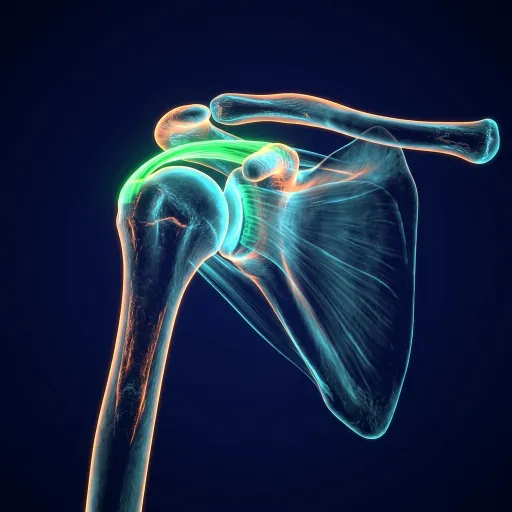
Shoulder
Hip

FAI & labrum tears

Femoroacetabular impingement (cam, pincer, mixed) is endemic in hockey players from years in the deep skating crouch. Labral tears that aren't surgical candidates often respond to intra-articular PRP. Dr. Knopp evaluates the full kinetic chain including iliopsoas, gluteal tendinopathy, and lumbar drivers.
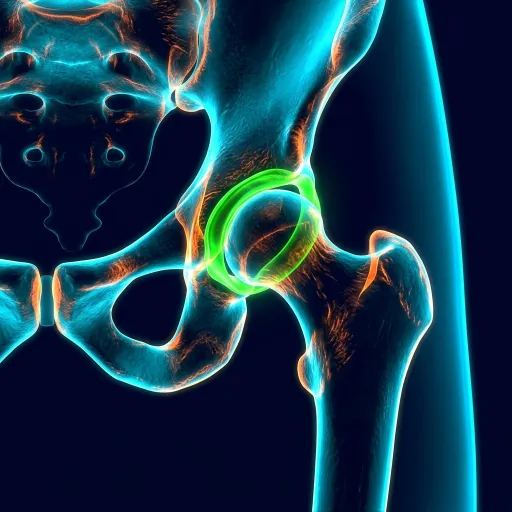
Hip joint
Groin

Adductor tendinopathy & "sports hernia"

Chronic adductor strain, athletic pubalgia, and the broad category often labeled "sports hernia" produce season-ending groin pain. LR-PRP to the adductor longus origin or the conjoined tendon is well-supported by orthobiologics literature for chronic cases that haven't responded to conservative care.

Groin pain
Spine

Lumbar facet pain & disc-related back pain

The skating posture loads the lumbar facets and posterior elements. Facet-mediated pain is confirmed with medial branch blocks; long-term relief comes from radiofrequency ablation (RFA) at Hartford HealthCare. Disc-related pain is approached with epidural steroid injections and OMT.
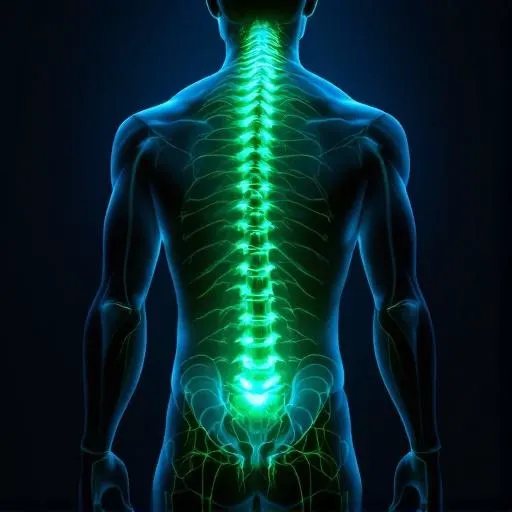
Lumbar spine
AC Joint

AC joint sprains & arthrosis

Acromioclavicular joint injuries from board contact and falls. Grade I and II sprains rehab well; chronic AC arthrosis with persistent pain often responds to ultrasound-guided injection. Cortisone for short-term relief; PRP is being studied for chronic cases.

AC joint
Knee

MCL & patellofemoral pain

MCL sprains from awkward cuts, patellofemoral pain from skating posture and quad-dominant biomechanics, and early-stage knee OA in older players. Treatment ranges from OMT to LR-PRP for chronic patellar tendinopathy, to LP-PRP for knee OA.
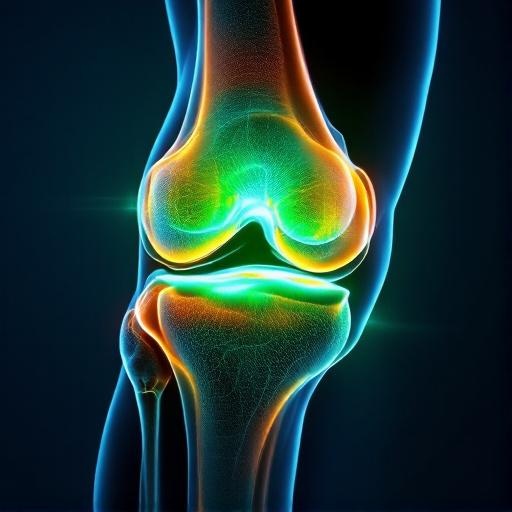
Knee
See all conditions Dr. Knopp treats →

Why PRP fits hockey injuries

PRP is your own platelets concentrated 3 to 8 times above baseline and injected into damaged tissue under ultrasound guidance. The growth factors released (PDGF, TGF-β, VEGF, IGF-1) recruit local stem cells, drive angiogenesis, and initiate matrix remodeling. For hockey players, the fit is specific: most chronic shoulder, hip, groin, and tendon injuries respond to a biological repair signal far better than to repeated cortisone (which can degrade tendon over time) or surgery (which removes you from the ice for 4 to 9 months).

Preparation matters clinically. Dr. Knopp uses LP-PRP (leukocyte-poor) for intra-articular work like the hip joint where excess inflammation is counterproductive, and LR-PRP (leukocyte-rich) for tendon work where the inflammatory phase is necessary for healing. All injections are performed under live ultrasound. Needle position directly affects efficacy, and "blind" injection is not appropriate care for a competitive athlete.

Typical recovery timeline: 4 to 6 weeks for tendon healing response, return to skating drills at 6 to 8 weeks, full contact at 10 to 12 weeks for most upper-body work. Lower-body and labrum work runs longer. Dr. Knopp builds the timeline around your season schedule.

Full overview of PRP & regenerative therapy →

Built for the CT hockey community

Connecticut has one of the deepest hockey ecosystems in the country, and Hartford sits at the center of it. Dr. Knopp's office at 61 S Main St in West Hartford is positioned to serve players across the full spectrum: AHL alumni, college and prep school athletes, adult league competitors, and the parents of serious youth players who often need their own injuries addressed.

Hartford Wolf Pack (AHL)

The top affiliate of the New York Rangers, playing at PeoplesBank Arena. One of the oldest continuously operating minor league hockey franchises in North America. Wolf Pack alumni are throughout the Hartford amateur scene.

College hockey in commute distance

Trinity College (Hartford, D-III), UConn (D-I Hockey East), Quinnipiac (D-I ECAC, recent national champion), and Yale (D-I ECAC). Current and former college players are well-represented in the patient population.

Adult Hockey League CT

AHL-CT runs four 12-game seasons per year (fall, winter, spring, summer). High participation across skill levels. Adult league injuries are the bread and butter of this practice.

Local rinks & programs

Veterans Memorial Skating Rink (West Hartford, NHL-sized), International Skating Center of CT (Simsbury), Simsbury Farms Ice Rink, and the Avon-Canton-Farmington Youth Hockey Association rinks. Most patients are within 25 minutes of the office.

What it costs

This is a private-pay practice. Dr. Knopp does not bill insurance, Medicare, or Medicaid for office visits. Pricing is published upfront, with no surprise bills. HSA and FSA accepted. Interventional procedures performed at Hartford HealthCare (epidurals, RFA, nerve blocks) are billed through the hospital and may be covered by your insurance separately.

Initial evaluation: $450

60 minutes. Full musculoskeletal exam, imaging review, OMT if appropriate, treatment plan. Bring any MRI or CT discs.

Follow-up visit: $250

30 minutes. OMT, treatment plan adjustment, progress evaluation. Many in-season players are seen every 2 to 4 weeks during active treatment.

PRP injection: $1,250 to $3,000

Per session. Range reflects single-site vs multi-site preparation and ultrasound guidance complexity. Estimate provided at evaluation.

Common questions from CT hockey players

My MRI shows a shoulder labrum tear. Surgery or PRP?

It depends on the tear pattern, your symptom profile, and your competitive timeline. Partial labrum tears (small SLAP, posterior labrum) without mechanical instability often respond to ultrasound-guided PRP, especially when combined with focused rehab and OMT for thoracic and scapular mechanics. Larger tears with instability, locking, or biomechanical block typically need surgical evaluation. Dr. Knopp reviews the imaging, does a hands-on stability exam, and makes a recommendation that respects your season.

I've had chronic groin pain for two seasons. PT and rest haven't worked. What now?

Chronic adductor or athletic pubalgia that hasn't responded to 3+ months of focused PT is exactly the patient profile where LR-PRP injection is most likely to help. Dr. Knopp identifies the precise pain generator under ultrasound (adductor longus origin, conjoined tendon, pubic symphysis), confirms with diagnostic injection if needed, and treats with LR-PRP. Recovery to full skating is typically 6 to 8 weeks.

I'm a former college player in my 30s and my hip is killing me. Is it FAI?

Possibly. Cam-type FAI is endemic in former hockey players from years in the deep skating crouch. The clinical pattern is anterior groin pain, decreased internal rotation, and a positive impingement test on exam. Imaging confirms. For FAI with secondary labral irritation but no mechanical block, intra-articular LP-PRP plus targeted OMT for the iliopsoas and gluteal tendons is a reasonable first step before considering surgical intervention.

Do you take my insurance?

No, this is a private-pay practice. Dr. Knopp does not bill insurance, Medicare, or Medicaid for office visits or OMT. Pricing is transparent. HSA and FSA accepted. If you need a procedure performed at Hartford HealthCare (epidural, RFA, nerve block, Sprint PNS), those are billed through the hospital and your insurance may cover them separately.

How fast can I get evaluated? Playoffs are in 6 weeks.

Most patients are seen within a week of calling. If you have a competitive deadline, mention it when scheduling. Dr. Knopp builds the treatment timeline around the season; there's a meaningful difference between "the right answer in 6 months" and "the right answer in 6 weeks," and a good plan respects both.

Ready to be evaluated

Most hockey patients book within a week. Initial evaluation is $450 for a 60-minute visit. Bring any imaging on a disc; MRI is especially helpful if you have one.

Call (860) 325-2869 Send a message

Office: 61 S Main St, Suite 308, West Hartford, CT 06107
Hours: Mon to Fri 8:00 AM to 5:00 PM