PRP + OMT: Why the Most Forward-Thinking Pain Practices in 2026 Combine Both
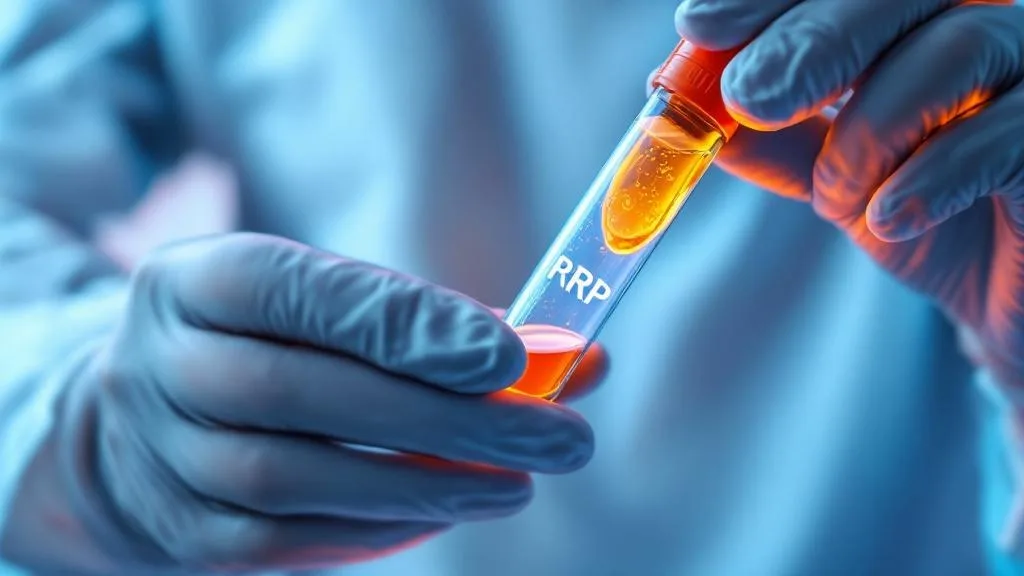
OMT prepares the tissue. PRP heals it. Here's why leading DOs now pair them.
Pain medicine in 2026 is dividing into two camps. One camp treats pain the way it has always been treated — with symptom management, anti-inflammatories, epidural steroids, and the occasional referral to physical therapy. The other camp asks a different question: what does the tissue actually need, and how do we create the conditions for it to heal?
Platelet-rich plasma and osteopathic manipulative treatment are not new modalities individually. PRP has been used in musculoskeletal medicine for over two decades. OMT has been practiced by osteopathic physicians for well over a century. What is new in 2026 is the clinical clarity around why these two treatments work better together than either works alone — and the emerging AI infrastructure that is helping physicians identify exactly which patients are the best candidates for combination therapy versus each approach individually.
If you have been managing chronic pain without lasting improvement, understanding the logic of this combination may change how you think about what is possible.
The Core Logic: Two Problems, Two Tools
Chronic musculoskeletal pain almost always involves two overlapping problems, not one. The first is a structural or biomechanical problem — restricted joint motion, muscular imbalance, fascial restriction, aberrant movement patterns that load tissue in ways it was not designed to sustain. The second is a tissue problem — degeneration, insufficient healing response, inflammatory dysregulation, compromised tendon or cartilage integrity.
Most conventional pain treatments address one problem poorly and ignore the other entirely. A cortisone injection suppresses inflammation but does nothing to correct the biomechanics that caused the inflammation. Physical therapy addresses movement patterns but cannot stimulate the biological repair process in damaged tissue. NSAIDs reduce pain signals without healing the tissue generating them.
OMT addresses the structural problem directly and thoroughly. PRP addresses the tissue problem directly and thoroughly. When you pair them — in the right sequence, for the right patient — you are treating both dimensions of the same clinical problem simultaneously. That is why the combination outperforms either treatment used in isolation for the patients it fits.
What PRP Actually Does at the Tissue Level
Platelet-rich plasma is prepared from the patient's own blood. A sample is drawn, centrifuged to concentrate the platelet fraction, and injected into the target tissue — a joint, a tendon, a ligament, a region of degenerative tissue. The concentrated platelets release growth factors: PDGF, TGF-beta, VEGF, IGF-1, and others. These growth factors signal the tissue to initiate a repair cascade — recruiting stem cells, stimulating collagen synthesis, promoting vascularization, and modulating the inflammatory environment from chronic and destructive to acute and regenerative.
The evidence base for PRP in musculoskeletal pain has matured significantly. A 2025 Frontiers in Physiology retrospective study found that PRP injections improved both pain and function in knee osteoarthritis, with median VAS pain scores dropping from 66.5 to 24 at six months and WOMAC scores declining from 29 to 12. A 2025 meta-analysis in Pain and Therapy confirmed statistically significant pain reduction compared to both active drug treatments and placebo across a range of chronic pain conditions.
For knee osteoarthritis specifically — one of the most common and most undertreated chronic pain conditions in adults over 40 — leukocyte-poor PRP demonstrates superior pain relief and functional improvement compared to hyaluronic acid and corticosteroids, particularly in patients with mild to moderate disease. The optimal concentration range identified in recent meta-analyses is 600-900 × 10⁹/L, with 3-5 injections at 7-14 day intervals producing the best sustained outcomes.
What PRP cannot do is fix the biomechanical environment in which the damaged tissue lives. If a knee joint is being loaded asymmetrically because of pelvic obliquity, hip weakness, or restricted ankle mobility, PRP will stimulate a repair process in tissue that continues to be stressed by the same forces that damaged it. The biological repair is real. The structural problem continues to drive re-injury.
That is where OMT enters the equation.
What OMT Does That No Injection Can
Osteopathic manipulative treatment works through the musculoskeletal system — assessing and correcting restrictions in joint motion, muscle tension, fascial mobility, and postural alignment that alter the way load is distributed through the body. An experienced osteopathic physician can identify, through trained palpation, the specific structural dysfunctions that are driving abnormal tissue stress in a given patient — and address them directly with hands-on techniques ranging from high-velocity thrust to myofascial release to muscle energy to visceral manipulation.
For a patient with chronic knee pain, OMT might address restricted tibial internal rotation, hip flexor shortening on one side, a rotated pelvis, or restricted thoracolumbar junction mobility — all of which can alter knee mechanics without showing up as a knee problem on MRI. Correcting these restrictions changes the biomechanical environment in which the knee lives. The joint is now moving through a range of motion that loads it symmetrically, with the surrounding musculature supporting rather than stressing it.
This is the preparation phase. OMT creates a structural environment in which a regenerative intervention like PRP can work at its full potential — because the tissue being stimulated to heal is no longer being simultaneously re-stressed by the same biomechanical dysfunction that damaged it.
The evidence for OMT in chronic musculoskeletal pain is substantial. Multiple systematic reviews document significant pain reduction and functional improvement, with effects persisting at long-term follow-up. A 2025 systematic literature review confirmed effectiveness across diverse patient populations including underserved and rural communities. Effect sizes at long-term follow-up of -0.40 are clinically meaningful — and they represent OMT used as a standalone treatment, without the additive benefit of concurrent regenerative therapy.
Why the Combination Outperforms Either Treatment Alone
The clinical rationale for combining PRP and OMT is mechanistically straightforward, even if the combination remains underutilized in conventional pain practice. OMT changes the structural environment — correcting biomechanical dysfunction, improving tissue perfusion and lymphatic drainage, reducing the abnormal loading patterns that perpetuate tissue damage. PRP changes the biological environment — supplying concentrated growth factors that initiate active tissue repair in a structure that was previously in a state of chronic, inadequate healing.
Done in sequence, OMT first creates optimal tissue conditions for the PRP injection: improved local circulation, reduced muscular guarding, corrected joint alignment. The injected platelet concentrate then distributes more effectively within a joint or tissue that is moving well rather than guarding against dysfunction. Post-injection, ongoing OMT maintains the structural correction as the tissue heals, preventing the mechanical stress patterns from re-establishing before the repair process is complete.
There is also a neurological dimension that is often underappreciated. Chronic pain alters central sensitization — the nervous system's calibration of what constitutes a pain signal. OMT has demonstrated effects on autonomic tone and central sensitization through mechanisms that PRP does not address. A patient whose chronic pain has a significant central sensitization component may experience poor PRP outcomes not because the tissue failed to respond to the growth factors, but because the nervous system is still interpreting normal tissue input as pain. Addressing somatic dysfunction and autonomic dysregulation through OMT before and after PRP addresses this dimension of the clinical problem.
How AI Is Identifying Who Benefits Most
One of the most significant clinical advances in regenerative medicine in 2025-2026 is the development of AI and machine learning tools that predict individual patient response to PRP before the first injection is given. This is not theoretical. A study published in 2025 developed an Explainable Boosting Machine algorithm to predict clinically meaningful improvement — defined as at least a 10-point KOOS JR improvement and 20% pain reduction — at six months after PRP injection for knee osteoarthritis.
The model achieved an AUC-ROC of 0.81, accuracy of 74%, sensitivity of 71%, and precision of 79%. The most predictive baseline patient characteristics were PROMIS Mental Health score, PROMIS Physical Health score, and baseline KOOS JR score — along with younger age, female sex, and mild-to-moderate osteoarthritis severity (Kellgren-Lawrence grade 2). The algorithm identified, from baseline data alone, which patients were most likely to achieve clinically meaningful improvement from PRP at six months.
This matters for treatment planning at several levels. First, it means physicians can identify patients who are strong PRP candidates and prioritize combination therapy for them — rather than offering PRP as a last resort after everything else has failed, which is when the tissue damage is most advanced and response rates are lower. Second, it means patients who are not ideal PRP candidates can be identified early and offered alternative regenerative or structural approaches rather than receiving an expensive intervention unlikely to produce meaningful results for them specifically.
Third — and most relevant to the combination approach — the AI research reveals that patient characteristics including mental health status are among the strongest predictors of PRP response. This aligns with the osteopathic whole-person model, which treats psychological and social context as clinically relevant data. A patient with poor mental health scores is both less likely to respond to PRP and more likely to benefit from the comprehensive evaluation and whole-person care approach that a physician trained under FOMCD 2026 standards is equipped to provide.
AI in Broader Regenerative Medicine Decisions
Beyond PRP-specific prediction, AI tools in regenerative orthopedics are expanding rapidly. A scoping review published in PMC describes AI systems that "analyze vast datasets of patient demographics and details to develop predictive models that help identify patients most likely to benefit from specific regenerative therapies" and assist in "designing personalized treatment plans based on individual needs." These systems are beginning to distinguish not just who will respond to PRP, but who needs structural intervention first, who needs combination therapy, and who is better served by a different regenerative modality entirely.
The clinical implication is a more precise, personalized approach to regenerative pain medicine — one that matches the right tool to the right patient rather than offering the same protocol to everyone with the same diagnosis.
Who Is a Good Candidate for PRP + OMT Combination Therapy
Not every patient needs both. Some patients present with primarily structural dysfunction — somatic restrictions, movement pattern problems, postural imbalance — without significant tissue degeneration. For these patients, OMT alone is the appropriate first-line approach, and many achieve complete resolution without any injection procedure.
Other patients present with significant tissue damage — established osteoarthritis, degenerative tendinopathy, cartilage loss — without significant structural dysfunction. In these cases, PRP may be the primary intervention, with OMT playing a supporting role in optimizing the recovery environment.
The patients who benefit most from combination therapy are those who have both: structural dysfunction that is altering how load is distributed through damaged tissue, and tissue damage that requires active biological stimulation to achieve meaningful repair. This pattern is extremely common in:
- Knee osteoarthritis with pelvic or hip biomechanical contributors — where the joint is degenerating partly because of abnormal loading driven by upstream structural dysfunction
- Rotator cuff tendinopathy with cervicothoracic restriction — where shoulder biomechanics are altered by thoracic hypomobility and cervical somatic dysfunction
- Plantar fasciitis with lumbar-pelvic dysfunction — where fascial tension at the foot is maintained by structural problems well above the symptomatic site
- Chronic low back pain with facet degeneration — where both tissue repair and structural correction are needed for durable improvement
- Hip labral pathology with sacroiliac dysfunction — where the regenerative intervention and the structural correction address different dimensions of the same clinical problem
The evaluation that determines which of these patterns a given patient presents — and which combination of interventions will serve them best — requires exactly the kind of whole-person, hands-on assessment that osteopathic training provides. It cannot be derived from imaging alone. It requires palpatory diagnosis, movement assessment, and clinical reasoning informed by both the structural and biological dimensions of the patient's condition.
How This Works in Practice
At this practice, the evaluation that precedes any regenerative intervention begins with a comprehensive osteopathic assessment. Every patient receives a full hands-on examination that identifies structural contributors to their pain — not just the symptomatic joint or tissue, but the regional and systemic biomechanical patterns that may be driving it. This examination often identifies relevant dysfunctions that imaging never revealed and that no previous treatment has addressed.
From that evaluation, the treatment plan is built around what the patient actually needs — which may be OMT alone, PRP as a primary intervention, or a sequenced combination of both. For patients pursuing combination therapy, the approach is structured: OMT to correct structural dysfunction and optimize the tissue environment, PRP to initiate the biological repair process, and follow-up OMT to maintain structural correction while the tissue heals.
The interventional procedures that require hospital resources — certain imaging-guided injections, surgical consultations — are handled through Dr. Knopp's hospital practice at Hartford HealthCare, where the full interventional toolkit is available. The structural assessment, the OMT, and the PRP that can be delivered in an office setting are handled here, in a concierge model that allows the time and attention that a complex pain evaluation requires.
This is what forward-thinking pain medicine looks like in 2026: not a single-modality approach, but a structured, evidence-informed combination of the biological and the structural — guided by a physician who can evaluate both, treat both, and coordinate the full clinical picture across settings.
Could you benefit from both?
A thorough osteopathic evaluation will identify whether your pain has both structural and tissue components — and which combination of treatments will serve you best.
Learn About Regenerative Medicine